
Plants
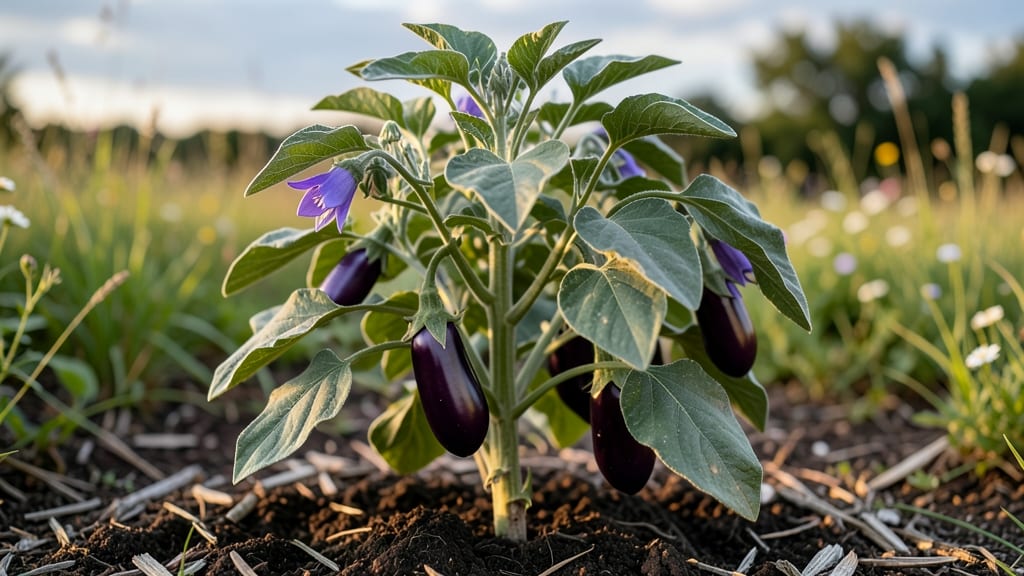
If you’ve ever wondered how tall do eggplant plants grow, the answer depends on the variety you choose—because these plants can range from compact dwarfs under 2 feet to towering giants reaching nearly 5 feet tall!
Most gardeners start with standard varieties that hit 3 to 4 feet, but dwarf types like ‘Fairy Tale’ or ‘Patio Baby’ stay under 2 feet, making them perfect for containers or small spaces.
The key to maximizing your harvest? Spacing and pruning—both of which can influence how much vertical room your 🍆 actually needs.
In this guide, I’ll break down exactly how tall different eggplant types grow, share space-saving tips for small gardens, and explain why height matters for yield and care.
Whether you’re working with a balcony or a backyard plot, you’ll learn how to give your plants the room they need to thrive.
Ready to plan your perfect eggplant patch? Let’s dive into the varieties, spacing secrets, and growth hacks that’ll help you grow bigger (and tastier) fruits—no matter how much space you’ve got!


Eggplant height by variety: a complete growth chart for gardeners
Eggplants are one of those versatile vegetables that can thrive whether you have a sprawling backyard or just a sunny balcony. The height of eggplant plants varies dramatically by variety, with some reaching towering heights of 4 feet while others stay compact at just 1-2 feet tall.
Choosing the right variety for your space—and understanding how to space them properly—can make the difference between a frustratingly small harvest and a bountiful garden.
If you're planning your garden layout, knowing the mature height of eggplants is crucial. Standard varieties like 'Black Beauty' can grow 3-5 feet tall, while dwarf varieties like 'Fairy Tale' stay under 2 feet.
Even the spread of eggplant plants matters—some varieties sprawl 2-3 feet wide, while others stay more upright. Let’s break down the most popular varieties by height so you can pick the perfect fit for your garden.
📊 Visual Growth Chart: Below is a quick-reference summary of eggplant varieties by height, including their mature size, spread, and ideal spacing for a thriving plant.
| Variety | Mature Height | Spread | Ideal Spacing | Best For |
|---|---|---|---|---|
| Dwarf Varieties | 1-2 ft | 1-2 ft | 12-18 inches apart | Containers, small gardens, balconies |
| Fairy Tale | 1.5-2 ft | 1.5 ft | 12 inches apart | Patio, windowsill, small-space gardening |
| Semi-Dwarf Varieties | 2-3 ft | 2-3 ft | 18-24 inches apart | Small gardens, raised beds |
| Ichiban | 2.5-3 ft | 2 ft | 18 inches apart | Early harvest, compact growth |
| Standard Varieties | 3-5 ft | 2-3 ft | 24-36 inches apart | Large gardens, in-ground planting |
| Black Beauty | 3-4 ft | 2.5 ft | 24 inches apart | Classic, high yield |
| Giant Varieties | 5-6 ft | 3-4 ft | 36-48 inches apart | Large spaces, trellises |
| Long Purple | 5-6 ft | 3 ft | 36 inches apart | Asian cuisine, large fruit |
For small-space gardeners, dwarf varieties like 'Fairy Tale' or 'Patio Baby' are game-changers. These plants stay under 2 feet tall and can even thrive in 5-gallon containers on your patio.
Meanwhile, standard varieties like 'Black Beauty' or 'Rosa Bianca' need more room to spread their leafy canopies, making them better suited for larger gardens or raised beds.
If you're growing eggplants in containers or urban gardens, opt for bushier varieties that don’t require staking. Varieties like 'Little Penny' or 'Fairy Tale' produce plenty of fruit without needing vertical support.
Just ensure your container is at least 12 inches deep and 18 inches wide to accommodate their root systems.
One common mistake is underestimating the spread of eggplant plants. Even dwarf varieties can spread 1.5-2 feet wide, so give them enough room to avoid overcrowding. Overcrowded plants compete for nutrients and sunlight, leading to stunted growth and smaller fruit.
Always follow the spacing guidelines in the chart above to ensure healthy, productive plants.
For vertical gardeners, taller varieties like 'Black Beauty' or 'Long Purple' can be trained to grow upward using trellises or cages. This not only saves space but also improves air circulation, reducing the risk of fungal diseases like powdery mildew. Just be sure to <
Space-saving tips to grow eggplants in small gardens or containers
If your garden space is limited—or you dream of growing eggplants on a balcony—don’t let size hold you back! With the right dwarf varieties and space-saving techniques, you can enjoy a productive eggplant harvest even in tight spots.
The key lies in selecting compact plants and using vertical growing methods to maximize your yield without sacrificing space.
For example, ‘Fairy Tale’ eggplants mature at just 1-2 feet tall, making them perfect for containers or small garden beds. Meanwhile, ‘Hansel’ and ‘Gretel’ varieties stay around 2-3 feet but produce abundant fruit.
Pair these with smart spacing and pruning, and you’ll transform even a tiny patch into a thriving eggplant oasis.
- Choose Compact Varieties
- Use Vertical Trellises or Cages
- Prune Strategically for Bushier Growth
- Opt for Container Gardening
- Pair with Shallow-Rooted Companions
Vertical training is a game-changer for small spaces. Install 5-foot trellises or tomato cages near your eggplants to guide their growth upward. This not only saves space but also improves air circulation, reducing the risk of fungal diseases like powdery mildew.
Simply tie the main stems to the trellis as they grow, and watch your plants climb toward the sky—literally!
Pruning is another secret weapon for managing height. Pinch off the topmost buds when your eggplant reaches your desired height (e.g., 3 feet). This encourages the plant to grow wider instead of taller, producing more fruit-bearing branches.
Just be sure to leave at least 3-4 main stems to ensure a good harvest. Regular pruning also makes it easier to monitor for pests and diseases.
Containers are ideal for urban gardeners, and eggplants thrive in them as long as the pots are large enough. A 5-gallon container works well for dwarf varieties, while standard types need at least 10-12 gallons of soil.
Use a well-draining potting mix with compost to keep roots happy, and place your containers in a spot that gets full sun (6-8 hours daily). Don’t forget to water deeply—containers dry out faster than in-ground beds!
Companion planting can also work wonders in small gardens. Pair your eggplants with bush beans, lettuce, or marigolds, which take up less vertical space but deter pests like aphids.
Avoid planting near potatoes or fennel, as they can stunt eggplant growth. With these tips, even a balcony garden can yield a surprising number of eggplants!