
Plants
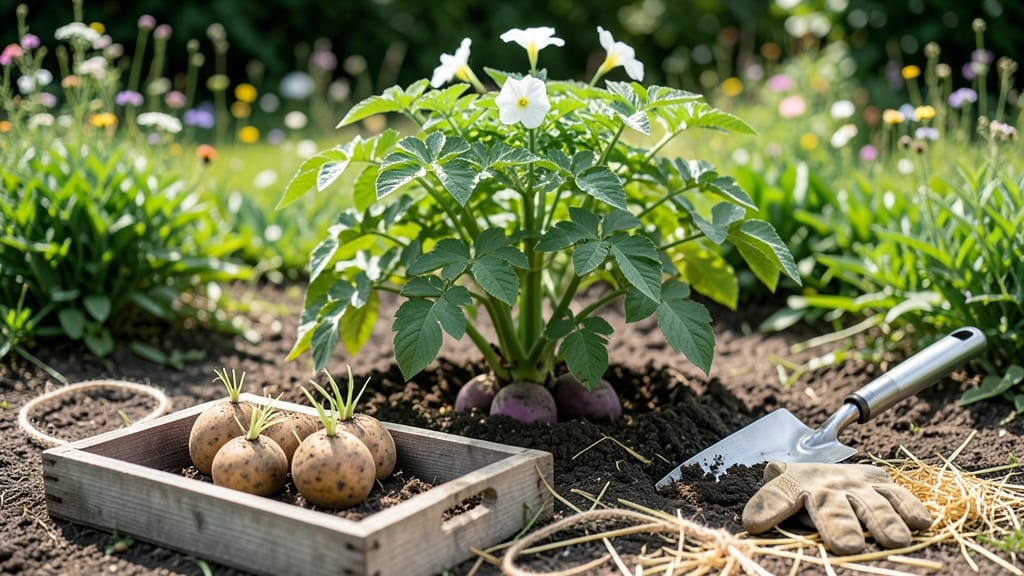
Planting fall potatoes in Virginia isn't just about tossing them in the ground—it's about catching that sweet spot between sweltering summer and the first frost. Miss the window, and you'll either watch your crop bolt or rot in the cold soil.
But with the right timing, you can grow crisp, flavorful 🥔 potatoes that harvest just before winter sets in.
Most Virginia gardeners in zones 7a-8a should aim for mid-August to early September, but your exact deadline depends on your county and local frost patterns. Too early, and your potatoes will mature before frost; too late, and they'll struggle to develop properly.
The key is balancing soil warmth with the approaching chill.
I've learned the hard way that rushing or waiting too long can mean the difference between a bumper crop and a sad pile of shriveled tubers.
In this guide, I'll break down the perfect planting schedule for your specific Virginia region, plus soil prep tips and variety recommendations that actually work in our climate.
Whether you're a first-time gardener or a seasoned grower, these insights will help you time your planting like a pro—so you can enjoy homegrown potatoes all winter long. Let's get those spuds in the ground the right way!
Virginia’s fall potato planting deadlines by county (avoid frost ruin)
Fall potatoes in Virginia require precision timing to avoid frost damage. The first frost typically hits between November 1-15, but exact dates vary by USDA Zone 7a-8a regions.
Plant too early, and tubers rot in cool soil; too late, and frost ruins your harvest. Let’s break down the county-specific deadlines to maximize your yield.
Northern Virginia (Zones 7a-7b), including Fairfax, Arlington, and Alexandria, has the earliest frost dates—often by November 1. For a 90-day variety, aim to plant between mid-August and early September.
The Piedmont region (Zones 7a-7b), like Charlottesville and Lynchburg, can stretch planting until late August due to slightly later frosts.
Southern Virginia (Zones 7b-8a), including Richmond, Petersburg, and Norfolk, enjoys milder fall temperatures. Here, you can plant as late as early September for a 120-day variety. Coastal areas like Virginia Beach may even push planting to mid-September, thanks to the moderating ocean influence.
🌱
| Region | USDA Zone | Planting Window | First Frost (Avg.) | Best Varieties |
|---|---|---|---|---|
| Northern VA | 7a-7b | Mid-August to Early Sept | Nov 1-7 | Yukon Gold, Red LaSoda |
| Piedmont | 7a-7b | Late August | Nov 5-10 | Kennebec, Fingerling |
| Southern VA | 7b-8a | Early Sept | Nov 10-15 | Russet, Purple Viking |
| Coastal VA | 8a | Mid-Sept | Nov 15-20 | Adirondack Red, Sweet Potato |
For Northern Virginia, prioritize 90-day varieties like Yukon Gold, which mature just before frost. In Southern Virginia, opt for 120-day varieties like Russet to extend your harvest window. Always check the Virginia Cooperative Extension for localized updates, as microclimates can shift deadlines by weeks.
Soil temperature is just as critical as air temperature. Potatoes need soil temps above 50°F to sprout and grow. Use a soil thermometer to confirm readiness—cool soil delays germination and invites rot. In clay-heavy soils common in Piedmont, amend with compost to improve drainage and warm up faster.
Pro tip: Plant seed potatoes 4-6 weeks before your expected first frost. For example, if frost hits November 10, aim to plant by October 1. This ensures tubers mature before cold sets in. Use straw mulch to insulate soil and protect emerging sprouts from early chills.
🌿
Don’t rely solely on averages—monitor your local weather forecasts and historical frost data. Tools like the National Weather Service or Old Farmer’s Almanac provide real-time updates. Adjust your planting date if forecasts predict an early frost.
For example, if Charlottesville’s frost date shifts to October 25, move your planting to late July for a 90-day variety.
Finally, choose disease-resistant varieties suited to Virginia’s humidity. Red LaSoda resists scab, while Purple Viking thrives in wetter coastal soils. Pair your variety with the right planting window, and you’ll harvest crisp, zero-frost potatoes every fall.
✂️
How to calculate your exact planting date for maximum yield
Timing your fall potato planting down to the day ensures a bountiful harvest before Virginia’s first frost. Start by checking your USDA zone (7a-8a)—this determines your frost-free window.
For example, Northern Virginia (Zone 7a) has about 180 frost-free days, while Coastal Virginia (Zone 8a) enjoys 200+ days. Use this as your baseline to calculate your planting window.
Next, select a 90- to 120-day potato variety—these mature just in time for fall harvests. Shorter varieties like ‘Yukon Gold’ (90 days) work for Northern VA, while longer varieties like ‘Kennebec’ (120 days) suit Coastal regions.
Always check the seed packet for exact days to maturity to avoid late-season surprises.
Here’s the key formula: Plant 4-6 weeks before your first frost date. For Northern VA (first frost: November 15), aim for mid-August to early September. Coastal VA gardeners can push planting to early October safely. Use the Virginia Cooperative Extension’s frost maps for precise county data.
- 1️⃣ Check frost dates: Use Virginia’s frost maps or local Extension offices.
- 2️⃣ Count back 4-6 weeks: Subtract from your first frost date to find your planting window.
- 3️⃣ Adjust for soil temp: Wait until soil reaches 50°F+ (use a soil thermometer).
- 4️⃣ Chit your seed potatoes: Place cut tubers in light for 2-3 weeks to sprout faster.
- 5️⃣ Plant at the right depth: Bury seed potatoes 4 inches deep with 12 inches between rows.
Don’t forget to account for soil temperature—potatoes won’t sprout until the ground warms to 50°F or higher. Test your soil with a thermometer or wait until late August when temperatures reliably hit this mark.
Pro tip: Plant earlier in warmer microclimates, like near blacktop or in raised beds, to extend your growing season.
For maximum yield, align your planting with the moon’s phases. Planting during a waxing moon (when the moon is growing) encourages stronger root development. Use a lunar planting calendar to pinpoint the best dates in August or September.
This old-school trick can boost tuber size by 20-30% in Virginia’s clay-heavy soils.
Finally, mark your calendar for harvest time. Aim to harvest 2-3 weeks before the first frost—this gives you time to cure potatoes for storage. If you’re unsure, dig a test tuber: if it’s 2-3 inches wide with a thick skin, it’s ready.
Save a few for next year’s seed potatoes, but always use certified disease-free tubers to prevent blight.