
Plants
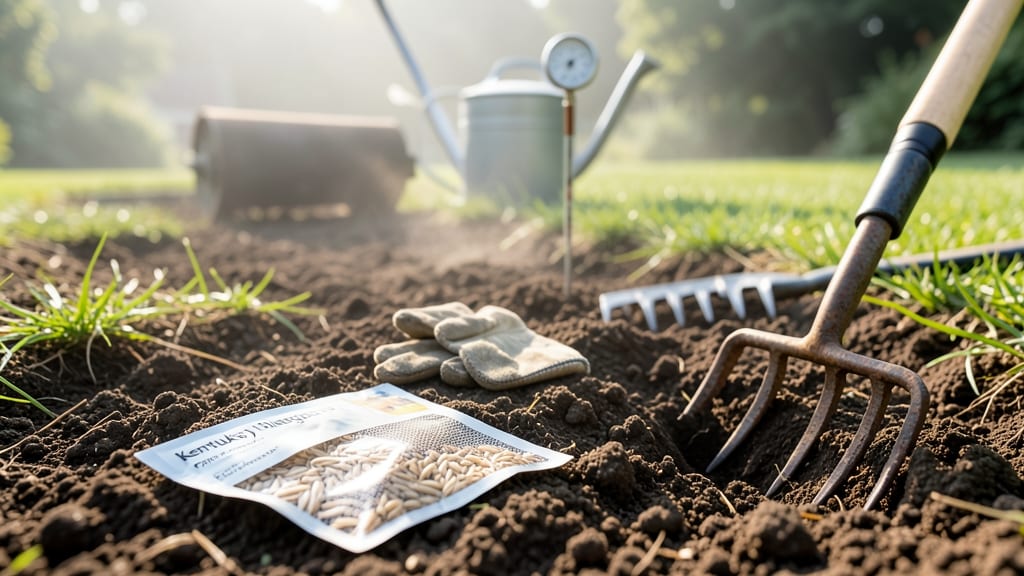
Planting grass seed at the wrong time in spring can leave you staring at bare patches for months—soil too cold, seeds too impatient, and your dream lawn slipping away.
The key to fast germination isn't just waiting for spring; it's timing it perfectly with your region's last frost and soil warmth.
In zone 6a, like much of the Midwest, aim for early spring—4-6 weeks before your last frost, typically late March or early April. But here's the catch: rushing too soon when soil temps dip below 55°F can stall growth, while waiting too long risks summer heat stress.
I'll show you exactly how to read your soil's cues and avoid the most common mistakes that sabotage new grass.
Beyond dates, your grass seed type matters—cool-season varieties like fescue thrive in those ideal spring months, while warm-season grasses wait for summer.
We'll break down the best prep work to give your seeds the head start they need, from soil testing to watering schedules that keep roots happy without drowning them.
Ready to skip the guesswork? Let's dive into the soil prep checklist that turns patchy hopes into a thick, green lawn in just 14-21 days. Your future self will thank you when the neighbors ask how you did it.
Optimal spring planting windows by region and grass seed type
Timing your grass seed planting in spring depends on two critical factors: your USDA hardiness zone and the type of grass you're growing. Cool-season grasses like Kentucky bluegrass and fescue thrive when planted in early spring, while warm-season varieties such as Bermuda or Zoysia wait for summer heat.
For zone 6a, my sweet spot, the ideal window opens 4-6 weeks before your last frost date—usually late March to early April.
But here's the catch: even within the same zone, soil temperatures can vary. Grass seeds need 55-65°F soil temps to germinate properly. If you plant too early and the ground stays cold, your seeds will languish.
Use a soil thermometer ($10 at garden centers) to check—if it's below 55°F, wait a week or two.
For cool-season grasses, aim for planting between March 15 and April 30 in zone 6a. These varieties establish roots quickly in cooler weather and handle spring rains better.
Warm-season grasses, on the other hand, should wait until late May to early June when soil temps hit 65-75°F—their ideal range for germination.
Regional variations matter too. In the Pacific Northwest, where springs are wetter, I often plant 2-3 weeks earlier to avoid soil compaction from rain. Meanwhile, in the Southeast, where summers are brutal, warm-season grasses get a head start by late April to beat the heat stress.
| Grass Type | Best Planting Window (Zone 6a) | Soil Temp Requirement | Germination Time | Key Tip |
|---|---|---|---|---|
| Kentucky Bluegrass | March 15 - April 15 | 55-65°F | 7-14 days | Needs consistent moisture |
| Tall Fescue | March 20 - April 30 | 50-65°F | 10-21 days | Drought-tolerant once established |
| Bermuda Grass | Late May - Early June | 65-75°F | 14-28 days | Goes dormant in winter |
| Zoysia Grass | May 15 - June 15 | 65-70°F | 21-30 days | Slow to establish but durable |
Don't let last frost dates fool you—always check your local microclimate. A low-lying area might frost later than your neighbor's hilltop. For extra safety, I recommend planting 2 weeks after your average last frost date, especially for cool-season grasses.
This gives your new seedlings time to develop roots before summer heat arrives.
If you're in a transition zone like 6b or 7a, consider planting cool-season grasses in fall instead of spring. Fall planting often yields better results because soil stays warm longer, and weeds are less competitive.
But if you're committed to spring, stick to the early window—before May 1—for the best germination rates.
Pro tip: If your spring is unpredictable (like mine in zone 6a**), have a backup plan. Keep extra seed on hand and be ready to reseed any thin patches in late summer if needed.
Patience is key—your grass won't establish overnight, but with the right timing, you'll see those first green shoots in just 7-14 days.
Finally, pay attention to your grass seed's maturity timeline. Some varieties like perennial ryegrass germinate quickly (7-10 days) while others, like fine fescue, take up to 21 days. Plan your seeding schedule so you can overlap varieties if needed for faster coverage.
Soil preparation checklist for fast grass seed germination
Before you even sprinkle that first bag of grass seed, your soil needs a solid foundation—think of it as laying the groundwork for a strong lawn. I’ve learned the hard way that skipping prep steps can leave seeds struggling to sprout, no matter how perfect the timing.
The goal? A loose, nutrient-rich, and moisture-retentive seedbed that gives your grass the best shot at taking root in just 14-21 days.
Start by testing your soil’s pH level—most grasses thrive between 6.0 and 7.0. If your soil is too acidic or alkaline, amend it with lime (to raise pH) or sulfur (to lower it) 4-6 weeks before planting.
This isn’t a last-minute fix; it takes time to adjust. While you’re waiting, remove all debris, rocks, and weeds from the area. A clean slate means fewer competitors for your new grass.
🌱 Step-by-Step Soil Prep for Grass Seed
- 🔍 Test soil pH (aim for 6.0–7.0) and amend if needed with lime/sulfur 4-6 weeks early.
- 🪴 Remove debris—raking out weeds, rocks, and old plant matter for a clean seedbed.
- 💧 Aerate compacted soil using a core aerator to improve water/root penetration.
- 🌱 Apply starter fertilizer (high nitrogen, low phosphorus) evenly across the area.
- 🌡️ Check soil temperature—wait until it’s 55–65°F (use a soil thermometer!).
- ✂️ Lightly rake the soil to create a fine, textured surface for seed-to-soil contact.
Next, aerate if your soil feels hard or compacted. A core aerator pulls out small plugs of soil, creating channels for roots and water. This step is a game-changer for lawns in high-traffic areas or clay-heavy soils.
After aerating, spread a starter fertilizer (look for a high nitrogen formula like 30-0-4) to give your grass a nutrient boost right from the start.
Timing matters here too—apply fertilizer 1-2 weeks before planting, not after. You want the nutrients to mingle with the soil, not wash away when you water.
Once your soil is prepped, do a final check: the surface should feel slightly rough (like a cat’s tongue) to help seeds grip and stay in place. If it’s too smooth, give it a light raking to create texture.
Pro tip: Water the soil 24 hours before planting to ensure it’s moist but not soggy. This helps seeds make immediate contact with water when you plant, kicking off germination faster.
Think of it as giving your seeds a hydration head start—they’ll thank you with quicker sprouts and a thicker lawn.
Finally, avoid walking on the prepped soil—every footprint can disrupt your hard work and create uneven seed distribution.
If you’ve nailed these steps, your grass seed will have the perfect environment to sprout in just 7-14 days, setting you up for a lawn that’s the envy of the neighborhood. 🌿