
Plants
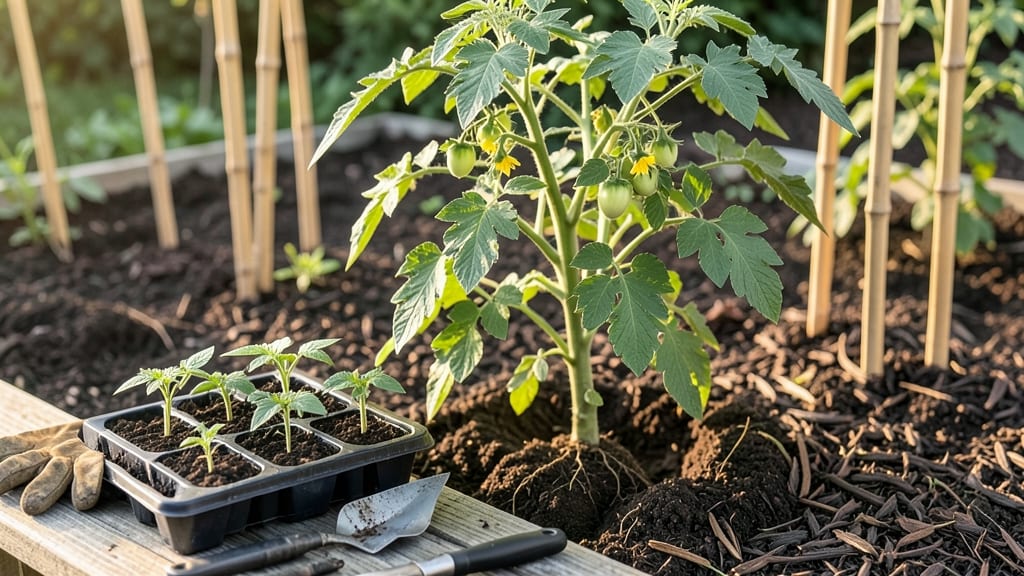
Timing when should you plant tomatoes in Iowa isn’t just about following a calendar—it’s about outsmarting the state’s fickle weather to guarantee a bountiful harvest before the first frost.
With only 165 frost-free days in zones 5a-5b, getting those seeds in the ground too early risks chilly soil and stunted growth, while planting too late cuts your harvest short.
Most gardeners in Iowa wait until after the last average frost date—around May 15—but that’s just the starting point. Soil temperature is the real game-changer: your 🍅 tomatoes need warmth to thrive, so aim for 60°F or higher before committing.
Whether you’re direct-sowing seeds or transplanting seedlings, this window ensures your plants have enough time to mature before summer slips away.
I’ve learned the hard way that rushing the process leads to disappointing results. In this guide, I’ll walk you through the exact steps to time your planting perfectly—from hardening off seedlings to using row covers for a longer season.
Let’s make sure your garden delivers the juiciest 🍅 tomatoes Iowa has to offer!
From choosing fast-maturing varieties to adjusting for microclimates, you’ll discover how to turn Iowa’s short growing season into your advantage. Ready to plant with confidence? Let’s get started.
Iowa’s frost dates and the perfect tomato planting window
Iowa’s short growing season and unpredictable spring frost demand precision when planting tomatoes. The average last frost date in Iowa is May 15, but this can shift ±10 days depending on your microclimate.
For example, northern Iowa (Zone 4) may see frost until May 25, while southern Iowa (Zone 5) often warms up by May 5. Timing matters because tomato seedlings can’t survive temperatures below 50°F—they’ll bolt or rot.
To maximize your harvest, aim to plant transplants 2-3 weeks after your area’s last frost date. This gives young plants time to establish roots before summer heat arrives.
For direct sowing seeds, wait until soil temperatures reach at least 60°F—use a soil thermometer to check, as surface temps can mislead. In Iowa, this typically aligns with late May for most regions.
Here’s the golden rule: Count backward from your first fall frost (usually September 30 in Iowa) and ensure your tomatoes have 75–90 days to mature. Fast varieties like 'Early Girl' (60 days) work better in northern Iowa, while slower growers like 'Brandywine' (85+ days) need southern Iowa’s longer season.
Use this frost-date formula to calculate your ideal window:
| Stage | Action | Iowa Timeline |
|---|---|---|
| Prep Soil | Add compost; test pH (6.0–6.8) | March–April |
| Start Seeds Indoors | 6–8 weeks before last frost | Early March |
| Hardening Off | 1 week before transplanting | Late April |
| Transplant Seedlings | After last frost, soil ≥60°F | May 15–June 1 |
| Direct Sow Seeds | After May 15, soil ≥60°F | Late May |
| Harvest Peak | 75–90 days after planting | July–September |
For northern Iowa gardeners, consider using row covers to extend your season by 2–3 weeks in spring or fall. These lightweight fabrics protect seedlings from late frosts (down to 28°F) and can push your harvest into early October.
In southern Iowa, you might even squeeze in a second planting of fast varieties in early July for a fall harvest.
Pro tip: Use black plastic mulch to warm soil faster and suppress weeds. Lay it down 1–2 weeks before planting to give the ground time to heat up. This trick can shave 7–10 days off your planting timeline, giving your tomatoes a head start in Iowa’s cool springs.
Always bury 2/3 of the stem when transplanting—this encourages deeper root growth and stronger plants.
If you’re direct sowing seeds in Iowa, plant them 1/4 inch deep and space rows 18–24 inches apart. Thin seedlings to 12–18 inches apart once they’re 4 inches tall to prevent crowding.
For transplants, choose healthy 6-inch-tall seedlings with thick stems and dark green leaves—avoid leggy or yellowing plants, as they’ll struggle in Iowa’s hot summers.
Monitor your local Iowa State University Extension updates for real-time frost advisories. Their Iowa Environmental Mesonet provides hyper-local soil temp data, which is more accurate than general forecasts.
For example, urban areas like Des Moines often warm up 3–5 days earlier than rural zones due to the heat island effect. Adjust your planting dates accordingly to avoid early-season setbacks.
Remember: Early planting isn’t always better
Iowa’s frost dates and the perfect tomato planting window
Iowa’s average last frost date of May 15 isn’t just a number—it’s the dividing line between success and disappointment for tomato growers. Planting too early risks frost damage to tender seedlings, while waiting too long can stunt growth before summer’s peak.
The key is understanding your microclimate and using soil temperature as your real guide, not just the calendar.
For most of Iowa (USDA zones 5a-5b), the sweet spot is April 25–May 10 for transplanting seedlings or May 1–May 15 for direct sowing.
This window gives your plants a 100+ day growing season before the average first frost (Sept 30), but you’ll need to adjust if you’re in northern Iowa (earlier dates) or southern Iowa (later dates).
| Stage | Action | Iowa-Specific Tip |
|---|---|---|
| Soil Temperature | ≥60°F (15.5°C) | Use a soil thermometer—Iowa’s clay soil stays cold longer. |
| Last Frost Date | After May 15 (average) | Check Iowa State University’s frost maps for your county. |
| Transplant Window | April 25–May 10 | Hardy off seedlings 10–14 days before transplanting. |
| Direct Sow Window | May 1–May 15 | Use black plastic mulch to warm soil faster. |
| First Frost Buffer | Plant 75-day varieties by June 1 | Extend season with row covers or cold frames. |
If you’re starting seeds indoors, begin 6–8 weeks before your target transplant date (so March 15–April 1 for most of Iowa). Use grow lights—Iowa’s short days in spring can stretch seedlings into leggy giants.
Pro tip: Bury seedlings deep (up to the first true leaves) to encourage strong root systems, which is critical for Iowa’s heavy clay soil.
For direct sowing, wait until the soil temperature consistently stays above 60°F—this usually happens May 1–15 in central Iowa, but can be late May in northern counties.
Use a seedling heat mat if you’re eager to get an early start, but don’t risk it after May 20 unless you’re using row covers.
Remember, Iowa’s growing season is short (165 days), so every day counts. If you’re in northern Iowa (Zone 4a), prioritize early-maturing varieties like ‘Stupice’ or ‘Mountain Merit’—they’ll give you fruit before the first frost.
In southern Iowa (Zone 5b), you can push the envelope with slightly later plantings and season extenders.
Track your local frost dates using the Iowa State University Extension’s frost calendar—it’s updated annually and accounts for microclimates like urban heat islands or protected garden spots. With the right timing, you’ll be harvesting juicy tomatoes in July instead of watching them wither by August.