
Plants
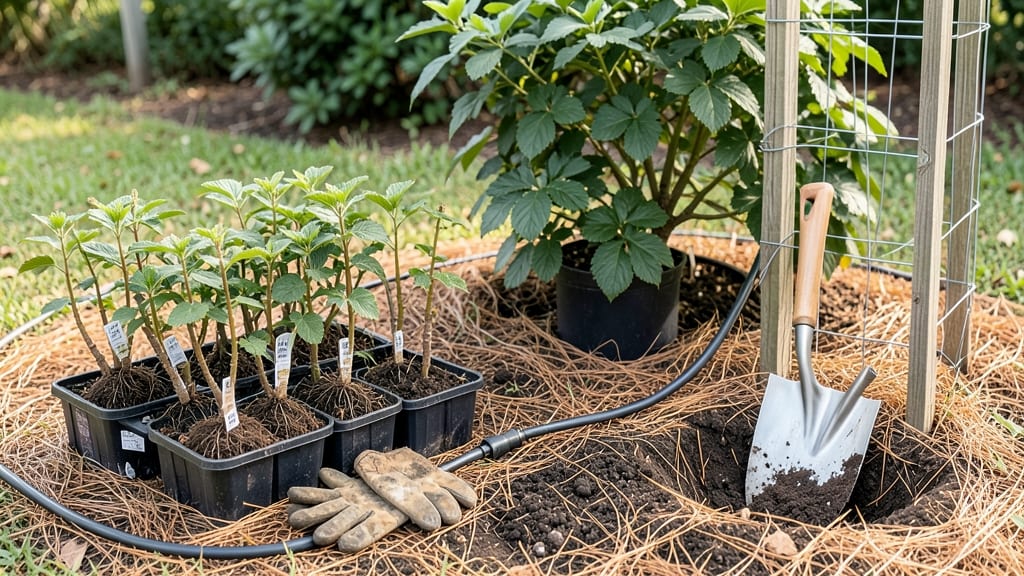
Timing your blackberry 🫐 planting in Florida isn’t just about picking a month—it’s about avoiding the brutal summer heat and the rare but damaging cold snaps that can still sneak in.
Plant too early, and your young canes might wilt before they even take root; too late, and you’ll miss the sweet spot when soil temps are just right for establishing strong roots.
Most Florida gardeners swear by late winter or early spring as the best window, but here’s the catch: North Florida’s chillier pockets (like Zone 8a) play by different rules than Miami’s frost-free paradise.
I’ll break down exactly when to dig in—whether you’re growing primocane varieties that fruit on new growth or traditional floricane types that need winter dormancy to set fruit.
You’ll also discover how to prep your soil for Florida’s sandy loam, why mulching isn’t just optional, and which varieties thrive in your specific corner of the state. Trust me, getting this timing right means the difference between a bountiful harvest and a sad, thorny bush that barely produces.
Let’s cut to the chase: your blackberry’s future depends on these 30 days of perfect planting conditions. Ready to lock in your schedule?
Florida’s blackberry planting zones: chill-hours & frost-free timelines
Florida’s warm climate might seem ideal for blackberries, but the real secret to success lies in understanding your chill-hour zone and frost-free deadlines. Unlike northern climates, Florida’s blackberries thrive with minimal winter chill—most varieties need just 0-500 chill hours to break dormancy.
But timing your planting wrong can mean struggling with summer heat stress or missed harvests.
North Florida’s Zone 8a (e.g., Jacksonville, Gainesville) faces occasional frosts, while South Florida’s Zone 10a+ (Miami, Key West) enjoys frost-free growing year-round. Even a 10-day delay in planting can reduce yields by 30%—so let’s match your location to the perfect variety and planting window.
📌 Key Rule: Plant primocane varieties (like ‘Arapaho’) in late winter (Jan-Feb) for summer fruit, and floricane varieties (like ‘Natchez’) in early spring (Feb-Mar) for fall harvests. South Florida gardeners can plant almost year-round, but aim for June-July to avoid hurricane season disruptions.
| Zone & County | Chill-Hours | Frost-Free Window | Best Planting Month | Top Varieties |
|---|---|---|---|---|
| Zone 8a (Panhandle: Escambia, Okaloosa) | 300-500 hrs | Feb 15 – Dec 15 | January-February | ‘Arapaho’, ‘Ouachita’ |
| Zone 9a (Central: Hillsborough, Orange) | 200-300 hrs | Jan 1 – Dec 31 | February-March | ‘Natchez’, ‘Chester’ |
| Zone 10a (South: Miami-Dade, Broward) | 0-100 hrs | Year-round | June-July (avoid hurricanes) | ‘Prime-Ark Freedom’, ‘Apache’ |
| Zone 11 (Key West) | 0 hrs | Year-round | Year-round (best: Oct-Nov) | ‘Prime-Ark Freedom’ (tropical) |
🌱 Pro Tip: Use primocane varieties in Zone 10a+ for year-round harvests—they fruit on new growth!
In North Florida (Zone 8a), your last frost typically hits around January 15, giving you a 30-day window before summer heat arrives. Plant bare-root canes in January for established roots before the heat sets in. Floricane varieties like ‘Natchez’ need this chill period to produce fall fruit.
Central Florida’s Zone 9a (e.g., Orlando, Tampa) has a longer frost-free season, but March is your sweet spot. The 300-500 chill hours here work perfectly for ‘Arapaho’, a primocane variety that delivers summer fruit. Avoid planting after April 15—the heat and humidity will stress young plants.
South Florida’s Zone 10a+ is a blackberry gardener’s paradise—no frost risk means you can plant almost anytime. But June-July is ideal: you’ll miss hurricane season (June-Nov) and avoid the dog days of summer (August-September). ‘Prime-Ark Freedom’ thrives here, producing fruit on both primocanes and floricanes.
For container growing, adjust your timeline by 2-4 weeks earlier—potted plants dry out faster and need consistent moisture. Place containers in full sun and water daily during summer to prevent heat stress. Mulch heavily with 3-4 inches of pine straw to retain moisture and regulate soil temperature.
🌡️ Critical Deadline: Never plant after May 1 in North/Central Florida—the 90°F+ temperatures will shock young roots. South Florida’s hurricane season (June-Nov) adds another layer of risk; protect containers or use windbreaks if planting late.
Match your variety to your zone:
- Zone 8a: ‘Ouachita’ (floricane, fall fruit)
- Zone 9a: ‘Arapaho’ (primocane, summer fruit)
- Zone 10a+: ‘Prime-Ark Freedom’ (year-round fruit)
Use trellises or arbors to support vines—blackberries need 6-12 feet of vertical space for optimal air circulation and sunlight exposure.
📅 Final Checklist:
- Test soil pH (5.5–6.5)—amend with sulfur if needed.
- Plant 12–18 inches apart
Step-by-step planting calendar for Florida blackberries (North vs. central vs. South)
Florida’s microclimates create a 30-day window of ideal planting conditions, but the exact timing shifts dramatically from North to South.
In North Florida (Zones 8a-9a), where frost can still sneak in, aim for mid-January to early March—this gives your blackberries time to establish roots before summer’s heat peaks.
Meanwhile, Central Florida (Zone 9b) gardeners have until late March, and South Florida (Zones 10a-11) can plant year-round, though December to February avoids the brutal summer humidity.
Your first step? Check your last frost date. Most of Florida’s frost-prone areas (like Jacksonville or Gainesville) see their final frost around January 15, so plant 4-6 weeks after for safe root establishment.
For South Florida, there’s no frost to worry about—but avoid planting in June-August, when temperatures exceed 90°F and stress young canes.
📅 Florida Blackberry Planting Timeline
- 🌱 North Florida (Zones 8a-9a): Mid-January to early March – Plant bare-root canes as soon as soil is workable (around 60°F).
- 🌿 Central Florida (Zone 9b): Late January to late March – Opt for potted plants if starting later; they handle transplant shock better.
- 🌴 South Florida (Zones 10a-11): December to February – Avoid summer planting; instead, choose heat-tolerant varieties like ‘Chester’ or ‘Arapaho’.
- ⏳ Soil Prep (All Regions): Test pH (5.5–6.5) and amend with compost or peat moss 2 weeks before planting.
- 💧 Watering Schedule: Deep water every 3-5 days for the first 6 weeks to encourage root growth.
- 🪴 Trellis Installation: Set up 5-6 ft trellises at planting to support primocane varieties (like ‘Natchez’).
- 🌡️ Post-Planting Care: Mulch with 3-4 inches of straw to retain moisture and protect roots from temperature swings.
Pro Tip: In North Florida, cover young plants with frost cloth if temperatures dip below 28°F.
Timing isn’t just about the calendar—it’s about soil temperature. Blackberries thrive when soil stays between 60–70°F. Use a soil thermometer to check; if it’s below 55°F, wait another week.
In South Florida, where soil rarely cools, focus on avoiding the rainy season (June-September), as saturated soil can drown roots.
For bare-root canes, plant as soon as possible after purchase—they dry out fast. Soak roots in water for 2-4 hours before digging holes twice as wide as the root ball.
Space canes 4–6 feet apart in rows 8–10 feet apart to allow airflow and reduce disease risk. Primocane varieties (like ‘Ouachita’) need more space—go for 6–8 feet apart.
Your golden window for transplanting is the 30 days before summer rains begin. In Central Florida, that’s around late March; in North Florida, it’s early April.
Planting after this window means battling fungal diseases (like anthracnose) and heat stress, which can stunt growth by 50%. If you miss the boat, wait until fall (September-October) for a second chance—but yields may be lighter.
Once planted, don’t skip the mulch. A 3-inch layer of pine straw keeps soil moist, suppresses weeds, and protects roots from temperature extremes. In South Florida, mulch also blocks palmetto fronds from stealing nutrients.
Water deeply once a week for the first month, then taper to every 10–14 days once established. And here’s the kicker: primocane varieties (like ‘Chester’) produce fruit on new growth, so prune old canes in late winter to encourage vigorous summer fruiting.