
Plants
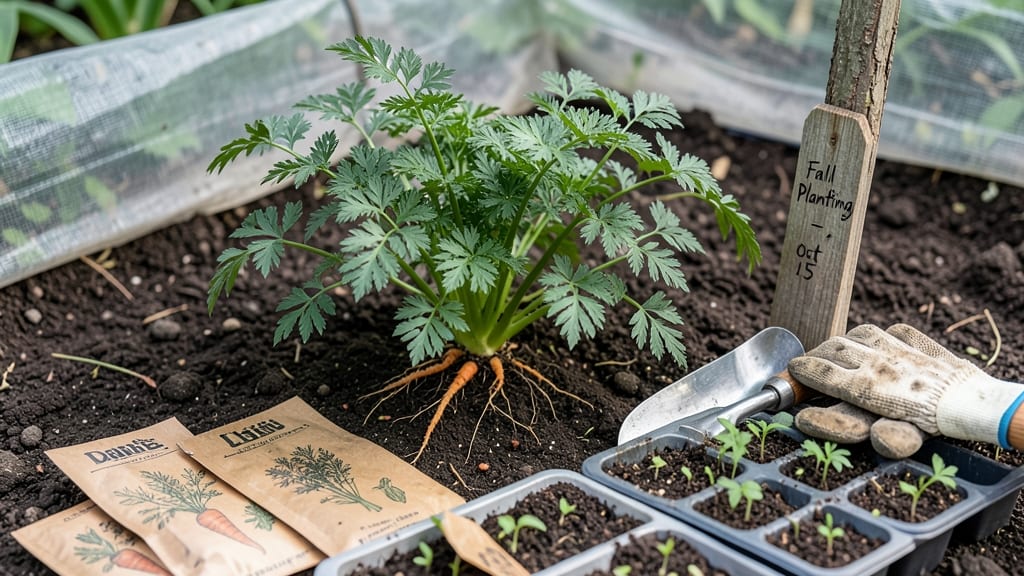
Planting carrots in the fall at the right time can mean the difference between a crisp, sweet harvest and a disappointing, woody mess. The key is timing it perfectly—about 8-12 weeks before your first frost—so your 🥕 roots mature just before winter sets in.
In USDA Zone 6a (like many northern gardens), that window typically opens in early to mid-September, giving you time to grow carrots through fall’s cool air before hard frost hits. But don’t wait too long—planting too late risks stunted growth or roots that split in cold soil.
I’ve learned the hard way that soil temperature matters just as much as dates. Aim for 60-70°F when seeds go in, then keep them moist until harvest.
The right timing also helps avoid pests and extends your harvest season—because nothing beats pulling fresh carrots straight from the garden in late fall.
Ready to nail your fall carrot crop? Let’s break down the exact steps, from soil prep to frost dates, so you can enjoy homegrown 🥕 all the way through winter.
Fall carrot planting calendar by USDA hardiness Zones
Planting carrots in the fall requires precision—get the timing wrong, and you’ll end up with woody roots or lost crops to frost. The key is planting 8-12 weeks before your first frost date, but exact timing varies by USDA zone.
In colder zones (like Zones 3-5), aim for late July to early August, while warmer climates (like Zones 8-10) can wait until September or October.
Soil temperature matters just as much as frost dates. Carrots thrive when soil stays above 45°F (7°C)—plant too early, and slow germination leads to stunted growth. Use a soil thermometer to confirm conditions before sowing seeds.
In Zones 6-7, this usually aligns with mid-August to early September, giving roots time to mature before winter sets in.
🌱
| USDA Zone | Ideal Planting Window | Soil Temp Requirement | First Frost Date | Harvest Window |
|---|---|---|---|---|
| Zones 3-5 | Late July to early August | 45-60°F (7-15°C) | Mid-September to early October | October to early November |
| Zones 6-7 | Mid-August to early September | 50-65°F (10-18°C) | Late October to mid-November | September to December |
| Zones 8-10 | September to early October | 55-70°F (13-21°C) | December to January | October to February |
For example, gardeners in Zone 5 should start seeds by July 20th to ensure a harvest before the first frost hits around October 15th. In Zone 8, you can push planting to October 1st and still enjoy carrots through December.
Always check your local frost dates—they can shift yearly due to climate changes.
Another critical factor is daylength. Carrots grow best with 12-14 hours of daylight, which is why late summer/early fall planting works perfectly. If you’re in a short-day region (like the Pacific Northwest), prioritize fast-maturing varieties (like 'Early Nantes' or 'Paris Market') to avoid bolting or frost damage.
Pro tip: Use a planting calendar or app like Old Farmer’s Almanac to track your exact frost dates. Many regions experience microclimates, so if your garden sits in a sunny, sheltered spot, you might extend your planting window by 1-2 weeks compared to official frost dates.
If you’re unsure about your zone, enter your ZIP code into the USDA Plant Hardiness Zone Map to pinpoint your exact location. This ensures you’re planting at the optimal time for crisp, sweet carrots rather than bitter, fibrous ones.
🌿
Once you’ve nailed the planting window, focus on soil preparation. Carrots need loose, stone-free soil to grow straight roots. Work in compost or aged manure before planting to boost fertility, but avoid high-nitrogen fertilizers, which encourage leafy growth at the expense of root development.
Finally, remember that fall-planted carrots often taste sweeter after a light frost. This natural sugar conversion happens as the plant’s starches turn to sugars in response to cold. Just be sure to harvest before a hard freeze (below 20°F/-7°C), which can damage roots.
✂️
Fall carrot planting calendar by USDA hardiness Zones
Nailing your fall carrot planting depends entirely on your USDA zone and first frost date. Carrots need 8-12 weeks to mature before winter arrives, so timing is everything.
In Zone 6a, for example, I plant mine between mid-August and early September—just enough time to harvest before hard frost in mid-October.
But if you live in warmer Zones 8-10, you’ve got more flexibility. The southern U.S. can plant carrots as late as October or even November, while northern Zones 3-5 need to start as early as July to avoid frost.
Always check your local last frost date and count backward!
Here’s a quick reference to help you plan:
| USDA Zone | Ideal Planting Window | Soil Temp (°F) | First Frost Risk |
|---|---|---|---|
| Zones 3-5 | July 15 – August 15 | 60-70°F | High (early Oct) |
| Zones 6-7 | August 1 – September 15 | 60-70°F | Moderate (mid-Oct) |
| Zones 8-10 | September 1 – October 31 | 55-65°F | Low (Nov-Dec) |
Pro tip: Use a soil thermometer to confirm temps—carrots hate cold soil! If your garden runs cooler than 55°F, wait a week or two. And remember, loose, rocky-free soil is non-negotiable for those perfect 🥕 shapes.
Once you’ve planted, focus on consistent moisture and thinning seedlings to avoid crowded roots. In my garden, I’ve found that succession planting every 2 weeks in late summer gives me a steady harvest right up until frost.
Don’t overlook cold-hardy varieties like ‘Nantes’ or ‘Danvers’—they handle cooler temps better than delicate types. And if frost sneaks up early? A lightweight row cover can buy you another 2-3 weeks of growing time.