
Plants
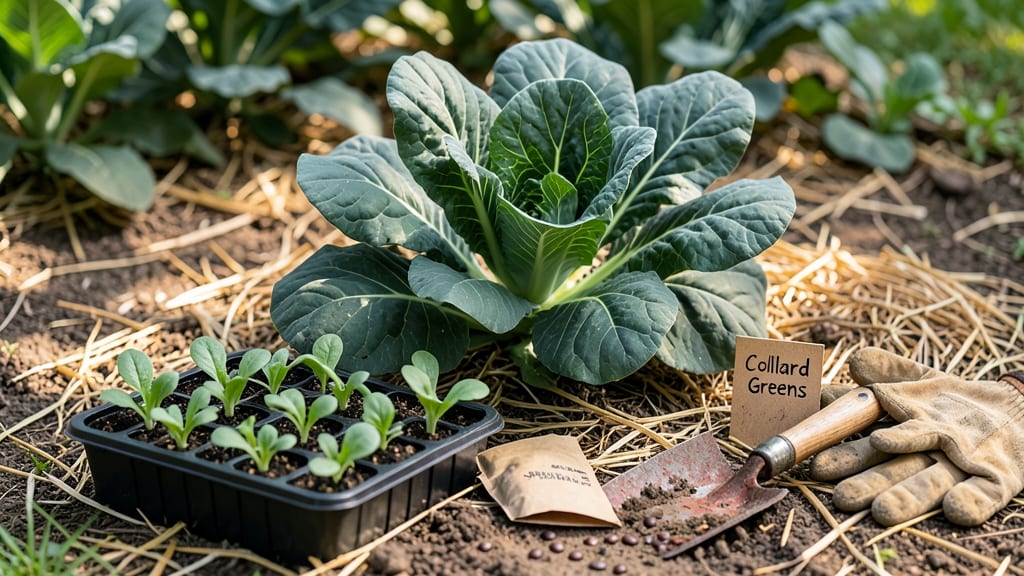
To plant collard greens in Alabama at the perfect time means the difference between a flourishing harvest and struggling plants—especially in our 7b-8b zones where frost can sneak in unexpectedly. These leafy greens 🥬 love Alabama’s mild winters, but timing matters more than you might think.
Most gardeners in Alabama get it wrong by planting too late in spring or too early in fall, risking stunted growth or frost damage. The ideal window starts in early spring (March-April) and late summer (August-September), but local microclimates can shift these dates by weeks.
I’ll break down exactly when to plant based on your Alabama region, from North Alabama’s cooler pockets to the Gulf Coast’s longer growing season. You’ll also learn how to stretch your harvest with simple tricks like row covers and succession planting.
Ready to grow collards that thrive all season? Let’s get your planting schedule nailed down for zero-frost stress and maximum yield.
Alabama’s collard green planting zones: frost-free dates by region
Alabama’s diverse climate—from the cool mountain valleys of the north to the humid coastal plains—creates distinct planting zones for collard greens. Understanding your local frost dates and microclimate is key to avoiding frost damage while maximizing harvests.
Most of Alabama falls within USDA Zones 7b-8b, but even small differences in elevation or proximity to water bodies shift optimal planting windows.
For Northern Alabama (e.g., Huntsville, Decatur), where frosts linger until mid-April, aim to plant collards in late March to early April for spring harvests. In contrast, Southern Alabama (e.g., Mobile, Gulf Shores) enjoys milder winters, allowing February plantings with minimal frost risk.
Coastal areas near the Gulf can even start as early as January under row covers.
Soil temperature is just as critical as air temperature. Collard seeds won’t germinate well in cold soil—wait until the ground reaches at least 50°F (10°C). In most of Alabama, this aligns with late March to early April for spring plantings.
For fall harvests, plant 6-8 weeks before your first frost (typically late August to early September in the north, September to October in the south).
Alabama Collard Green Planting Zones: Frost-Free Dates & Soil Thresholds
| Region | Last Frost Date | First Frost Date | Spring Planting Window | Fall Planting Window | Soil Temp Threshold |
|---|---|---|---|---|---|
| Northern Alabama (USDA 7b) | Mid-April | Mid-November | Late March–Early April | Late August–Early September | 50°F (10°C) |
| Central Alabama (USDA 8a) | Early April | Late October | Early March–Mid-April | Early September–Mid-October | 45°F (7°C) |
| Southern Alabama (USDA 8b) | Late March | Early November | February–Early April | September–Early October | 40°F (4°C) |
| Coastal Alabama (USDA 8b-9a) | Early March | Mid-November | January–March | August–September | 35°F (2°C) |
If you’re unsure about your local frost dates, check the Alabama Extension’s frost maps or use a frost calendar for your county. For example, Birmingham (Zone 7b) typically sees its last frost around April 1, while Montgomery (Zone 8a) can plant as early as March 15.
Urban areas like Huntsville may experience 2-3°F colder nights than rural areas just 10 miles away due to the "urban heat island" effect.
For coastal gardeners, humidity and salt spray can stress collards, so prioritize well-draining soil and afternoon shade during summer. Inland areas should focus on moisture retention—mulch heavily to prevent soil from drying out during Alabama’s hot, dry summers.
Both regions benefit from raised beds, which warm up faster in spring and drain better in heavy rains.
Pro tip: Use collard varieties suited to your zone. ‘Georgia Southern’ and ‘Blue Max’ thrive in Alabama’s heat, while ‘Vates’ handles cooler mountain climates better. Always buy seeds labeled for Southern exposure to ensure heat tolerance.
Even with perfect timing, late frosts can still sneak in. Protect young plants with frost cloth or row covers until they’re at least 6 inches tall. In Zone 7b (northern AL), this means waiting until after April 15 to remove covers, even if the air warms up.
Remember: Succession planting is your secret weapon. Instead of one big planting, sow every 2-3 weeks from March through September to ensure a continuous harvest—especially critical in Alabama’s unpredictable climate where unusual cold snaps can hit as late as December.
Alabama’s collard green planting zones: frost-free dates by region
Alabama’s diverse climate means your collard green planting window can vary by hundreds of miles. North Alabama’s cooler microclimates (like Huntsville) have later frost dates than the Gulf Coast’s Mobile, where winters are nearly frost-free. Knowing your exact zone helps avoid frost damage or wasted seed packets.
Most Alabama gardeners fall into USDA zones 7b-8b, but even within these zones, frost dates shift dramatically. For example, Birmingham typically sees its last frost around March 15, while Dothan in the Wiregrass region can plant as late as April 1 without frost risk.
Coastal areas like Pensacola often escape frost entirely.
Here’s how to match your region to the perfect planting window for zero-frost stress and maximum harvest potential:
Soil temperature is just as critical as air temperature. Collard seeds won’t sprout below 50°F, so wait until soil warms to at least 55°F in spring or 60°F in fall. Use a soil thermometer to check—especially in North Alabama’s cooler pockets where soil lags behind air temperature.
Pro tip: If you’re in a frost-prone zone (like North Alabama), start seeds indoors 4-6 weeks before your last frost date. This gives seedlings a head start and extends your harvest window by 3-4 weeks compared to direct sowing.
For Gulf Coast gardeners, the real challenge isn’t frost—it’s heat. After 90°F days, collards bolt (go to seed) faster. Choose heat-tolerant varieties like ‘Georgia Southern’ or ‘Blue Max’ to push your harvest into October without stress.