
Plants
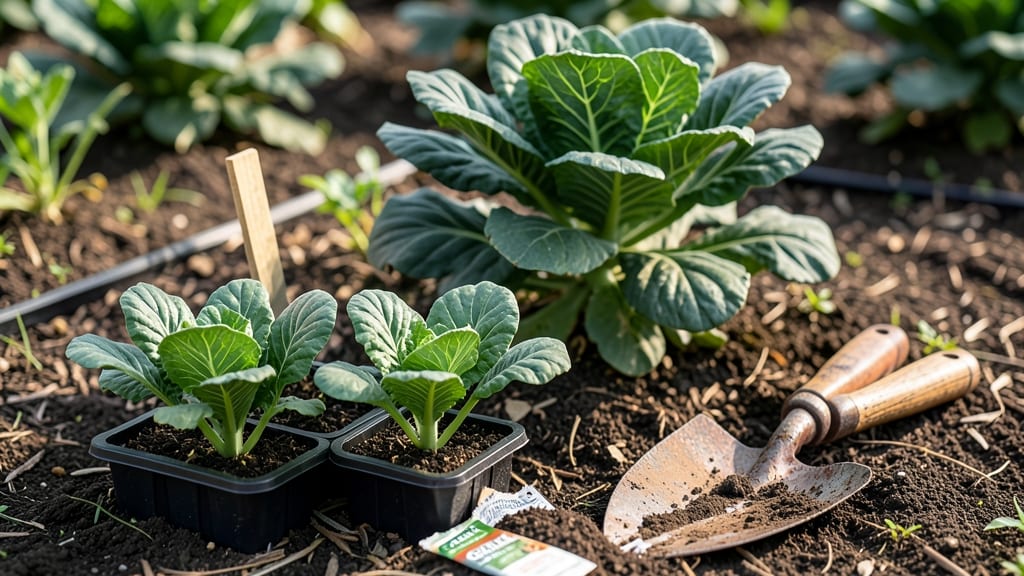
Planting collard greens at the wrong time in South Carolina can leave you with bitter leaves or no harvest at all. The key to success lies in understanding your local frost dates and heat zones—whether you're in Charleston's coastal warmth or Greenville's cooler Piedmont air.
For year-round harvests, timing matters more than you might think. Spring plantings in February-March give you tender greens by April, while fall plantings in August-September let you enjoy them through November's first frost. But get it wrong, and your 🥬 could bolt or freeze before reaching full flavor.
I'll show you exactly when to plant in your specific county—from the Upstate's Zone 7b to the coast's Zone 8a
Ready to grow collards that taste sweet and stay productive? Let's dive into the frost-date calculator and planting secrets that work for SC's diverse climate zones.
South Carolina frost dates by county: best planting windows for collard greens
South Carolina’s diverse climate—from the coastal lowcountry to the Piedmont’s rolling hills—creates unique planting windows for collard greens. Coastal areas like Charleston (Zone 8a) enjoy longer growing seasons, while inland cities such as Greenville (Zone 7b) face earlier frosts.
Understanding your USDA hardiness zone and average frost dates ensures you plant at the perfect time for a bountiful harvest.
Collard greens thrive in cool weather but bolt (go to seed) in hot temperatures. In SC, the ideal planting windows are early spring (February–March) and late summer/fall (August–September). Spring plantings yield harvests by April–May, while fall plantings extend your greens into November before frost.
Here’s a breakdown of frost dates by region and the best planting windows for your county. Use this as your collard green planting calendar to avoid frost damage or missed harvests.
For example, if you’re in Charleston (Zone 8a), you can start seeds indoors in January for an early spring transplant. In Greenville (Zone 7b), wait until mid-March to avoid frost damage. The fall window is critical—planting too late in September risks bolting before harvest.
Use a frost-date calculator (like the one from the SC Extension Service) to refine your timing. Input your zip code for hyper-localized frost predictions. For instance, Hilton Head (Zone 8b) has a 210-day frost-free season, while Spartanburg (Zone 7a) has just 180 days.
Pro tip: Succession plant every 2–3 weeks in spring and fall to ensure a continuous harvest. This works especially well in Zone 8a, where you can extend fall harvests into December with row covers.
Collard greens are cold-hardy but won’t tolerate freezing temperatures. If frost is forecasted, protect young plants with row covers or straw mulch. In Zone 7a, this means covering plants by October 15.
Remember, soil temperature matters too. Collard seeds need soil at 50°F+ to germinate. In Upstate SC, wait until soil warms in late April for spring plantings. Use a soil thermometer to check—this avoids wasted seeds.
For year-round harvests, combine spring and fall plantings. In Zone 8a, you can even squeeze in a winter harvest by planting in October and using cold frames to extend the season.
How to adjust planting times for SC’s microclimates and heat zones
South Carolina’s diverse heat zones (7a-8b) and microclimates mean your neighbor’s perfect planting time might not work for you. For example, Charleston’s Zone 8a can handle earlier spring plantings than Greenville’s Zone 7b, where late frosts linger longer.
Understanding these variations helps you fine-tune your schedule for optimal growth and harvest timing.
Start by checking your USDA heat zone—most of SC falls between 7a and 8b. Coastal areas like Beaufort (Zone 8a) have longer growing seasons, while inland cities like Columbia (Zone 7b) face earlier frosts.
Use this as your baseline, then adjust based on local patterns like elevation or proximity to water bodies, which can create microclimates with unique frost risks.
🌱Pro Tip: If you’re unsure about your zone, use the SC Frost Date Calculator from Clemson Extension. Plug in your county, and it’ll generate customized planting windows based on historical frost data.
For instance, in Zone 7b, wait until March 15 for spring plantings, while Zone 8a gardeners can start as early as February 15.
📌 Key Adjustments by Heat Zone
- Zone 7a (Upstate): Plant spring collards no earlier than March 20 to avoid frost damage. Fall plantings should start by August 15 for a late harvest.
- Zone 7b (Piedmont): Begin spring plantings March 1 and extend fall plantings to September 1 for a second crop before frost.
- Zone 8a (Coastal): Start as early as February 15 for spring and push fall plantings to September 15 to maximize growth.
- Zone 8b (Coastal Lowcountry): Plant year-round with minimal frost risk, but prioritize spring (Feb-Mar) and fall (Aug-Oct) for best flavor.
Don’t overlook microclimates—even within a county, frost patterns vary. For example, mountainous areas like the Blue Ridge Escarpment may experience 2-3 weeks later last frosts than nearby valleys. Observe your garden’s history: if your yard freezes earlier than official averages, delay planting by 1-2 weeks to play it safe.
For succession planting, stagger your collard greens every 2-3 weeks during the ideal window. This ensures a continuous harvest and reduces the risk of bolting (going to seed) during heatwaves.
For example, in Zone 7b, plant a batch on March 1, 15, and 30 for a steady supply through May.
Finally, monitor local weather forecasts in the weeks leading up to planting. A cold snap in April can push back your schedule, while an unseasonably warm winter might let you plant earlier than expected. Flexibility is key—adjust your timeline based on real-time conditions to keep your collards thriving. ☀️