
Plants
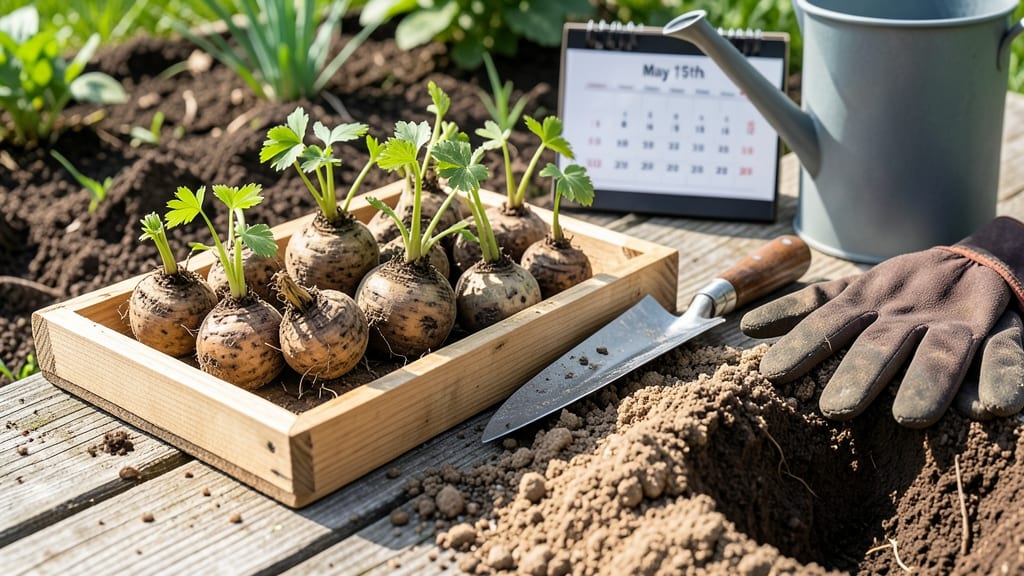
Planting dahlia tubers in Michigan isn't just about the calendar—it's about dodging frost and catching that sweet spot when the soil warms up just right.
If you get the timing wrong, you'll either lose your tubers to late frosts or miss out on those show-stopping blooms that make your garden the talk of the neighborhood.
I've learned the hard way that Michigan's unpredictable springs demand a little strategy. The key is waiting until the soil hits at least 55°F, usually between mid-May and early June, depending on whether you're in the Upper or Lower Peninsula.
But here's the game-changer: using your local frost dates as a backup plan ensures you're not left scrambling when those unexpected cold snaps hit.
What you'll discover is how to read your climate like a pro—balancing soil thermometers, frost charts, and even neighborhood gardener gossip to pinpoint the perfect moment. Let me walk you through the exact steps I use to guarantee my dahlias thrive from the first warm day forward.
From cold frames to pre-sprouting tricks, we'll cover everything you need to know to turn Michigan's short growing season into your dahlias' prime time. Ready to transform those dormant tubers into a summer-long floral masterpiece?
Michigan dahlia planting dates: soil temperature & frost risk guide
Michigan’s frost dates and soil temperatures are the two most critical factors for planting dahlia tubers successfully. Unlike heat-loving plants, dahlias won’t thrive if planted too early—cold soil stunts root growth, while late frosts can kill young shoots.
The ideal window balances these risks, and it varies by Michigan’s USDA zones (5a-6b) and microclimates.
For most of Michigan, the last average frost date falls between May 10-25, but this shifts 2-3 weeks later in the Upper Peninsula. I recommend waiting until your soil reaches 55-60°F—use a soil thermometer to check, as visual cues like sprouting grass aren’t reliable.
In Detroit (Zone 6a), this typically means late May, while Traverse City (Zone 6b) may see safe planting by early May.
Here’s the golden rule: Plant dahlia tubers 2-3 weeks after your last frost, but only when soil is warm enough to encourage root establishment. Rushing leads to rot-prone tubers, while waiting too long cuts your bloom season short. Let’s break down the specifics for Michigan’s key regions.
| Region | Avg. Last Frost | Ideal Planting Window | Soil Temp Goal | Risk if Planted Early |
|---|---|---|---|---|
| Southern MI (Detroit, Ann Arbor) | May 10-15 | May 25 - June 5 | 55-60°F | Frost damage to sprouts |
| Western MI (Grand Rapids, Kalamazoo) | May 15-20 | June 1-10 | 55-60°F | Stunted growth from cold soil |
| Northern MI (Traverse City, Petoskey) | May 20-25 | June 5-15 | 55-60°F | Fungal diseases from damp soil |
| Upper Peninsula (Marquette, Houghton) | June 1-10 | June 15-25 | 60°F+ | Severe frost risk |
🌱 Pro Tip: Use Michigan State University’s Frost Date Map to refine your local window.
If you’re unsure about your exact frost date, track local forecasts for 3 consecutive nights above 40°F—this signals the danger zone for tender dahlia shoots.
I’ve planted in early May in Zone 6a with row covers and seen success, but bare tubers left unprotected suffered 50%+ loss from late frosts. For peace of mind, err on the side of waiting until June 1 in riskier areas like Northern Michigan.
Another trick I use is the “wrist test” for soil warmth: Press your hand into the soil—if it feels lukewarm (like a fresh cup of tea), it’s ready. Cold soil (like a fridge shelf) means wait another week.
Pair this with a 3-day forecast showing no frost warnings to minimize stress on your tubers.
For gardeners in Zone 5a (e.g., Northern Lower Peninsula), consider starting tubers indoors in late March under grow lights. This gives you a 4-6 week head start and lets you transplant hardier sprouted tubers earlier. Just avoid letting them overheat—keep temps below 75°F to prevent leggy growth.
One common mistake I’ve seen is planting based on calendar dates rather than soil conditions. For example, May 15 might feel safe in Grand Rapids, but if a late frost hits (which happens 1 in 3 years), your dahlias will suffer.
Always monitor soil temps and adjust your timeline accordingly.
If you’re in a microclimate (like a south-facing slope or urban heat island), you can plant 1-2 weeks earlier than the average. Test your spot by planting radishes—if they thrive, your soil likely warms faster. Conversely, low-lying areas or northern exposures may need a 2-week delay.
Remember: Dahlias are perennial tubers, but they don’t survive Michigan winters outdoors. Even if you plant early, dig and store tubers by first frost (typically October 1-15) to replant next year. This <
Michigan dahlia planting dates: soil temperature & frost risk guide
Michigan's USDA Zones 4-6 create a tricky balance for dahlia lovers. The Upper Peninsula's Zone 4 faces later last frosts (around May 20-30), while the Lower Peninsula's Zones 5-6 typically see frost-free dates between May 5-20. But don't rely solely on dates—soil temperature is your true north.
Dahlia tubers need soil that's consistently 55-60°F to thrive. In Detroit (Zone 6), this usually happens by mid-May, while Grand Rapids (Zone 6a) might wait until late May. Traverse City (Zone 6b) gardeners often plant around May 25 to avoid late frosts that can linger into June.
🌱Pro Tip: Use a soil thermometer—plant when readings hit 55°F for 3 consecutive days. This beats guessing games with Michigan's infamous "false springs."
🌱 Michigan Dahlia Planting Timeline
| Region | Last Frost Date | Ideal Planting Window | Soil Temp Check |
|---|---|---|---|
| Upper Peninsula (Zone 4) | May 20-30 | June 1-15 | 60°F+ |
| Lower Peninsula (Zone 5-6) | May 5-20 | May 20-June 10 | 55°F+ |
| Southeast MI (Zone 6b) | April 25-May 10 | May 10-25 | 55°F+ |
Source: Michigan State University Extension 2023
Even with perfect timing, Michigan's late frosts can sneak up. I've lost entire batches of dahlias to May frost—don't let that be you! Check the National Weather Service for your city's 10-year frost averages and add 2 weeks to your planting date as a buffer.
For Zone 4 gardeners, consider starting tubers indoors in late March and transplanting after Memorial Day. This gives you a 3-week head start on the growing season. Just be sure to harden off your plants for 7-10 days before moving them outside.
🌿Remember: Dahlias planted too early in cold soil will rot. Too late, and you'll sacrifice 6-8 weeks of potential blooms. The sweet spot? Plant when your neighbor's lilacs are in full bloom—that's nature's perfect cue for Michigan gardeners!