
Flowers
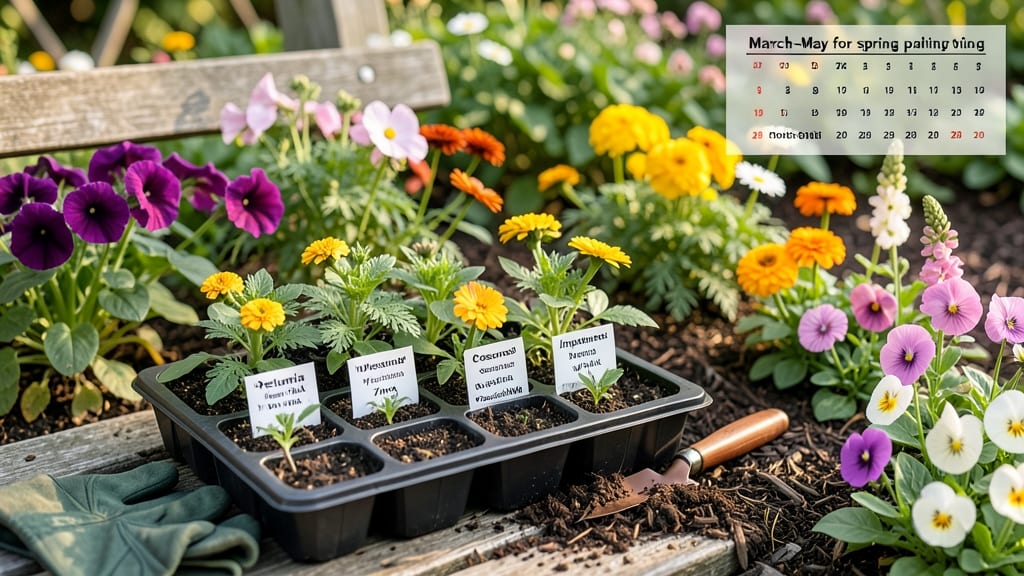
Planting flowers in Alabama at the wrong time can mean the difference between a garden bursting with color and one struggling under the heat or frost.
The secret to thriving blooms lies in understanding your region's unique climate—whether you're in North Alabama's cooler 7a zones or the milder 8b areas of the south.
With Alabama's late winter to early spring planting window (February-April) and a second chance in late summer/fall (August-September), timing is everything. Miss these deadlines, and you might end up battling heat stress or late frosts that could stunt your 🌸 flowers before they even bloom.
I've seen firsthand how a few weeks can make or break a garden—whether it's azaleas struggling in early spring heat or fall-planted mums thriving through winter. Let me show you exactly when to plant for your specific Alabama location and flower types to maximize your blooming success.
From preparing soil after the last frost to choosing heat-tolerant annuals or cool-season perennials, we'll cover all the critical steps. You'll learn why some gardeners swear by fall planting and how to adjust your schedule for urban microclimates that can be 5-10°F warmer than rural areas.
Alabama’s best flower planting calendar: spring deadlines by flower type
Alabama’s USDA Zones 7a-8b offer gardeners a long growing season, but timing is critical for vibrant blooms. Spring planting kicks off after the last frost, typically mid-March in North Alabama and early March in South Alabama.
Missing these windows can leave flowers struggling with heat stress or pest pressure.
For annual flowers, like zinnias and marigolds, aim to plant after April 15 in most regions. These heat-lovers thrive when soil temperatures exceed 60°F. Meanwhile, cool-season perennials such as pansies and violas can handle earlier plantings, even as early as February in South Alabama.
Bulbs like daffodils and tulips need a different approach. Plant them in late fall (October-November) for spring blooms, but if you missed that window, early spring (February-March) is your second chance—just be prepared for shorter bloom cycles.
North vs. South Alabama matters too! In North Alabama (Zone 7a), wait until after April 1 for most flowers, while South Alabama (Zone 8b) gardeners can start as early as mid-February for heat-tolerant varieties.
| Flower Type | Best Planting Window | Soil Temp Requirement | Notes |
|---|---|---|---|
| Heat-Loving Annuals (Zinnias, Marigolds, Petunias) | After April 15 (North AL) / After March 15 (South AL) | 60°F+ | Direct sow after last frost |
| Cool-Season Perennials (Pansies, Violas, Snapdragons) | February-March (South AL) / March-April (North AL) | 50°F+ | Transplant seedlings |
| Spring-Blooming Bulbs (Daffodils, Tulips) | February-March (late plantings) | 45°F+ | Shorter bloom cycles |
| Native Wildflowers (Black-Eyed Susans, Coneflowers) | March-April | 55°F+ | Drought-tolerant; low maintenance |
Preparing your soil is just as important as timing. Work in 2-3 inches of compost before planting to improve drainage and fertility. Alabama’s clay-heavy soils benefit from organic matter, especially in low-lying areas where water pools.
For container gardening, use well-draining potting mix and plant after May 1 to avoid overnight chills. Containers warm up faster than garden beds, so heat-sensitive flowers like impatiens need extra protection until soil temperatures stabilize.
Don’t forget about microclimates! Urban gardens near pavement heat up faster than rural areas, while shaded spots under trees may need partial-shade flowers like coleus or fuchsias. Adjust your planting schedule based on your garden’s unique conditions.
Pro tip: Use row covers for early plantings to shield flowers from late frosts. These lightweight fabrics trap heat during the day and provide insulation at night, extending your planting window by 2-3 weeks.
Finally, keep an eye on your local Alabama Cooperative Extension Service for updated frost dates. Their frost prediction maps are invaluable for fine-tuning your planting schedule each year.
Why fall planting in Alabama often outperforms spring: key deadlines and benefits
Fall planting is my top recommendation for Alabama gardeners because cooler temperatures and reduced pest pressure create ideal conditions for flower establishment. Unlike spring, when plants often struggle with transplant shock from sudden heat, fall gives your 🌸 blooms time to develop strong roots before winter dormancy.
The key window runs from mid-August to early October, with September being prime time. This aligns perfectly with Alabama's USDA zones 7a-8b, where soil stays warm enough for root growth but air temperatures drop gradually, protecting tender new plants.
Science backs this up: studies show fall-planted flowers experience 30-50% less transplant shock due to reduced heat stress. Plus, cooler nights mean fewer aphids and spider mites—common pests that ravage spring plantings when they emerge.
✅ Fall Planting Benefits
- Cooler temps reduce transplant shock
- Longer bloom cycles through spring
- Fewer pests compared to spring
- Established roots before winter
- Better soil moisture retention
❌ Spring Planting Challenges
- Heat stress on young transplants
- Pest pressure peaks in May
- Drought risk increases in June
- Rapid growth can lead to floppy stems
- Limited bloom time before summer heat
For annuals like zinnias and marigolds, aim to plant by September 15th in North Alabama or October 1st in the warmer southern regions. Perennials such as black-eyed Susans and coneflowers benefit most from August planting, giving them time to establish before winter.
Pro tip: Test your soil's moisture content before planting—Alabama's clay soils can become waterlogged in fall rains. Amend with compost or sand to improve drainage, and mulch heavily to protect roots from temperature swings.
I've seen fall-planted mums continue blooming through December in my Birmingham garden, while spring-planted ones often wilt by July. The secret? Timing + proper soil prep—two factors that make fall planting Alabama's best-kept gardening secret.