
Trees
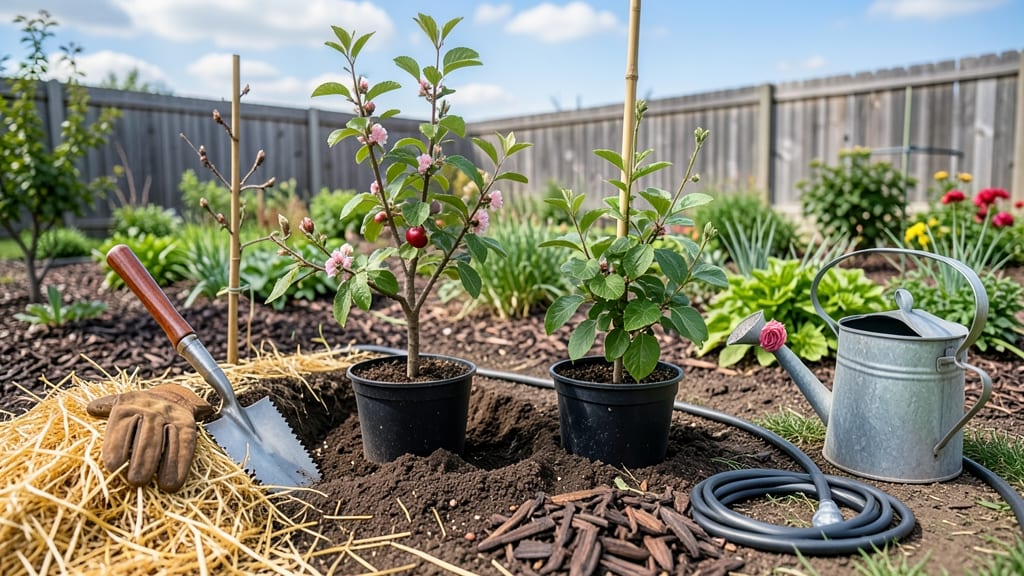
Timing is everything when you plant fruit trees in Iowa—get it wrong, and your 🍎🍒🍐 saplings might not survive the next freeze. The key? Planting during Iowa’s 5a-5b zone windows when soil thaws but before spring rains turn muddy, or in fall when trees enter dormancy before hard frosts arrive.
Most gardeners swear by early spring (March-April) for bare-root trees, but fall (September-October) works too—just avoid planting when soil temps drop below 40°F. I’ll show you exactly how to match your fruit tree variety to Iowa’s chill-hour needs and frost dates so your orchard thrives from year one.
You’ll learn which varieties handle Iowa’s short growing season best, how to prep soil for well-draining roots, and when to buy container-grown trees versus bare-root stock.
Let’s get your orchard off to the right start—because in Iowa, a few weeks can mean the difference between a bumper crop and a sad sapling.
From Honeycrisp apples to Montmorency cherries, we’ll cover the critical deadlines you can’t afford to miss. Ready to plant with confidence? Let’s dig in.
Iowa fruit tree planting deadlines by chill-hour requirements
Iowa’s USDA Zones 5a-5b demand precise timing for fruit trees, where chill hours (below 45°F) trigger blooming. Most varieties need 500-1,000 chill hours, but late frosts (often April 15) force early spring planting. Miss these deadlines, and your apple blossoms or cherry buds could freeze before fruiting.
For bare-root trees, plant in early spring (March-April) as soon as soil thaws. Container-grown trees can go in until late fall (October), but avoid planting when ground temps drop below 40°F. Iowa’s first frost (October 15) signals dormancy prep—no new plantings after this.
Here’s how to match chill-hour needs to Iowa’s planting windows:
| Variety | Chill Hours | Iowa Planting Window | Frost Risk |
|---|---|---|---|
| Honeycrisp Apple | 600-800 | March 15-April 30 | High (late blooms) |
| Montmorency Cherry | 500-600 | March 1-April 15 | Very High (early blooms) |
| Elberta Peach | 800-1,000 | April 1-May 15 | Moderate (mid-season) |
| Stanley Plum | 400-500 | September 1-October 15 | Low (fall planting) |
| Arctic Frostberry | 200-300 | April 15-May 30 | None (late bloomer) |
*Chill hours = cumulative hours below 45°F. Source: Iowa State University Extension.
For low-chill varieties (like Arctic Frostberry), aim for April 15-May 30 to avoid late frosts. High-chill trees (e.g., Elberta peaches) need April 1-May 15 to establish roots before Iowa’s summer heat (75°F+). Use frost-free date maps from the National Oceanic and Atmospheric Administration (NOAA) to refine your timeline.
Iowa’s soil temperature must reach 50°F before planting—test with a soil thermometer at 4” depth. Clay-heavy soils (common in Iowa) slow warming; amend with compost to improve drainage. South-facing slopes warm faster, giving trees a 2-3 week head start over north-facing sites.
Pro tip: Container-grown trees can handle fall planting (September-October) because their roots stay active longer. Bare-root trees, however, must go in before buds swell—typically by mid-April. Check root collar depth (should sit 2-3 inches above soil) to prevent rot from waterlogging.
If you’re in southern Iowa (Zone 6a), you have a 10-14 day window longer than northern areas (Zone 5b).
Use this to your advantage by planting early-blooming varieties (like Montmorency cherries) 3-5 days earlier than the general guideline. Urban heat islands (e.g., Des Moines) may also extend your fall planting window by 1-2 weeks.
Always mulch heavily (4-6 inches of straw) after planting to insulate roots
How to extend Iowa’s short growing season for fruit trees
Iowa’s short growing season (just 150 frost-free days) can make fruit tree success feel like a gamble—but it’s not. The key is creating a microclimate that shields young trees from late spring frosts and early fall chills.
Start by planting on south-facing slopes where warmth lingers longer, or near windbreaks (like evergreen hedges) that trap heat and deflect cold winds.
For extra protection, use frost cloth (a lightweight, breathable fabric) when nighttime temps dip below 32°F. Drape it loosely over the tree—like a loose tent—so it doesn’t smother new growth. I’ve seen Honeycrisp apples survive -5°F nights with this trick, even in Zone 5a.
Another game-changer? Mulching with 4-6 inches of straw or wood chips. This insulates roots from temperature swings and keeps soil moisture steady. Just avoid piling mulch against the trunk—leave a 3-inch gap to prevent rot. Think of it as a cozy blanket for your tree’s roots.
⚠️ Critical Mistake to Avoid
Planting too early in March when soil is still frozen or too late in October when roots can’t establish before winter. Both scenarios leave trees vulnerable to heaving (roots popping out of frozen ground) or dormancy stress. Aim for 40-50°F soil temps—use a soil thermometer to check!
If you’re planting in urban heat islands (like Des Moines or Cedar Rapids), take advantage of the 5-10°F warmer microclimates they create. These areas can push low-chill varieties like Montmorency cherries to maturity when rural orchards would fail.
Just monitor for heat stress—water deeply in the early morning to prevent leaf scorch.
For bare-root trees, soak roots in water for 1-2 hours before planting to jumpstart hydration. If you’re using container-grown trees, prune any circling roots gently with pruners—this encourages outward growth.
Both methods help trees establish faster in Iowa’s brief window between last frost (April 15) and first frost (October 15).
Pro tip: Plant dwarf varieties (like Columnar apples) closer to your home or garage. The radiant heat from buildings can add 10-15 extra chill hours—enough to make the difference for peach trees in marginal zones. Just avoid planting directly against walls, which can cause heat stress in summer.