
Plants
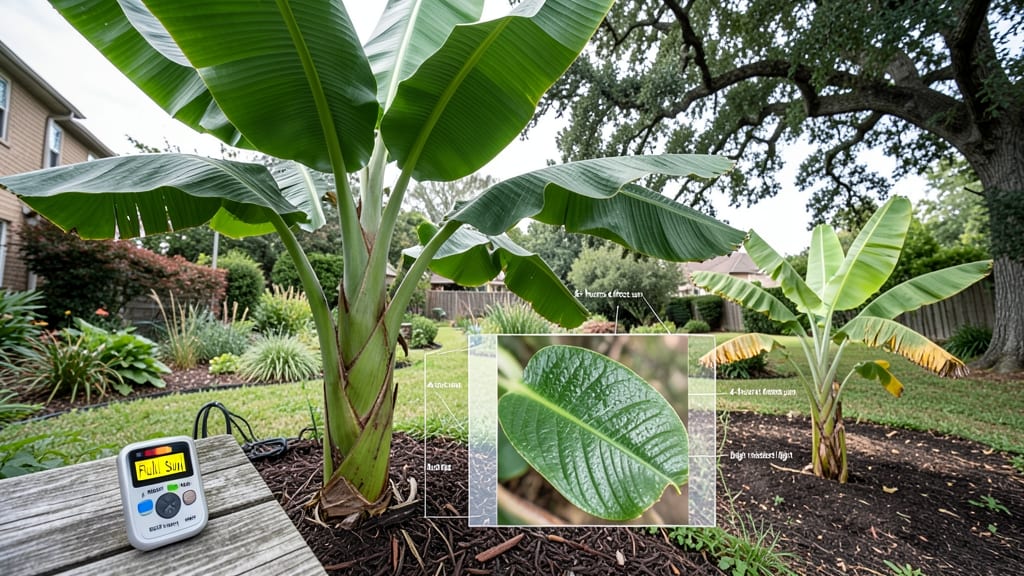
To grow a thriving 🍌 banana plant, you need to know how much light a banana plant needs—it’s all about sunlight. These tropical giants demand 6+ hours of direct light daily, but too much can scorch leaves while too little stunts growth.
Whether you're nurturing one in a sunny patio or a bright indoor nook, getting the light balance right is the key to lush foliage and sweet fruit.
Banana plants in their natural General (Tropical/Subtropical) habitats soak up full sun, but indoor growers often struggle to replicate this. Without enough light, your plant might stretch awkwardly toward the window or develop weak, pale leaves.
On the flip side, harsh afternoon rays can crisp the edges of leaves, signaling stress. The trick is finding that sweet spot—bright, indirect light for indoor plants and morning sun with afternoon shade outdoors.
If you're in USDA Zones 10-12, your banana can bask in the sun year-round, but cooler climates require containers and a sunny windowsill or grow lights. Even a few hours of direct light can make a difference, but don’t expect fruit without full-sun exposure.
I’ll show you how to spot light-related issues early and adjust your setup for healthy, productive growth—no guesswork needed.
Ready to transform your banana plant from struggling to stunning? Let’s break down exactly how much light your 🍌 banana craves, plus pro tips for maximizing it in any space. Your plant’s future harvest depends on it!
 Best Window Placement
Banana plant sunlight requirements: ideal hours and light intensity explained
Banana plants are tropical powerhouses that crave bright, direct sunlight to thrive. In their native habitats, they bask under 6-8 hours of full sun daily, but container-grown plants adapt well to 4-6 hours if other conditions are perfect.
The key is balancing light intensity with humidity—too much sun without enough moisture leads to leaf scorch.
Most commercial varieties like Cavendish bananas need full sun exposure (6+ hours) to produce fruit, while dwarf varieties tolerate partial shade (4-5 hours) better. Cooking bananas, like Plantains, actually prefer more shade (50-70%) to prevent bitter flavors. Always match your variety’s needs to avoid stunted growth or poor fruiting.
| Variety | Sunlight Needs | Notes |
|---|---|---|
| Cavendish | 6-8 hours full sun | Best for fruiting; needs heat |
| Dwarf (e.g., 'Dwarf Cavendish') | 4-6 hours full sun | Tolerates partial shade; great for containers |
| Plantains (Cooking Bananas) | 5-6 hours filtered sun | Prefers shade to avoid bitterness |
| Red Bananas | 6-7 hours full sun | Needs consistent moisture to prevent leaf burn |
Light intensity matters just as much as duration. Direct sunlight (like midday rays) provides the high-energy light bananas need for photosynthesis, while filtered or dappled light (through trees) reduces intensity. In hot climates, afternoon shade (2-5 PM) prevents leaf scorch, especially for container-grown plants with limited root systems.
Seasonal adjustments are crucial. During summer months, banana plants in USDA Zones 9-11 may need afternoon shade to prevent leaf burn. In cooler zones (8 or below), extend sunlight exposure to 8-10 hours using grow lights or moving pots to sunnier spots.
Always monitor leaf color—yellowing edges signal too much sun, while pale green leaves mean insufficient light.
Measuring light intensity at home is simple. Use a light meter (or smartphone app) to check foot-candles—bananas thrive at 10,000-15,000 foot-candles (full sun). For indoor growers, place pots near south-facing windows with clear glass (no curtains blocking UV rays).
If natural light is insufficient, supplement with LED grow lights (6400K color temperature) for 12-14 hours daily.
Container size affects light needs. Smaller pots (5-gallon) dry out faster and may need more frequent watering to compensate for intense sunlight. Larger containers (15+ gallons) retain moisture longer, allowing you to rotate pots for even sun exposure.
Always use well-draining soil mixed with perlite or coconut coir to prevent root rot from overwatering in hot conditions.
Regional adaptations are key. In desert climates (e.g., Arizona), banana plants need daily misting or shade cloth to survive full sun. In humid zones (e.g., Florida), they thrive with minimal shade but require good air circulation to prevent fungal diseases.
For urban growers, balcony setups with reflective surfaces (like white walls) can increase light exposure by 20-30%.
Mistakes with light often start with gradual acclimation. If moving a banana plant from indoor shade to outdoor sun, do it over 7-10 days, increasing exposure by 1-2 hours daily.
Conversely, harden off indoor plants before placing them in low-light conditions to avoid shock. Signs of stress include crispy leaf edges (too much sun) or elongated, weak stems (too little light).
Pro tip: Rotate your banana plant’s pot quarter-turns every 2-3 days to ensure even sun exposure. This prevents leaning growth toward light sources and promotes balanced foliage. Pair this with regular pruning of dead leaves to maximize light penetration to the lower canopy, where new shoots emerge.
Signs your banana plant has too much or too little light
Your 🍌 banana plant communicates its light needs through leaf color and growth patterns. Too little light causes leaves to stretch toward the sun (a condition called etiolation), turning pale and weak.
Meanwhile, excessive light—especially harsh afternoon rays—can scorch leaves, leaving crispy, brown edges. These visual cues are your plant’s SOS signals, and acting fast can save it from decline.
Start by checking the leaf color. Healthy banana leaves are deep green with vibrant veins. If they’re yellowing between veins, it’s often a sign of overwatering or poor drainage, but if the entire leaf turns pale or yellow, your plant is likely starved for light.
On the flip side, brown or crispy leaf tips or white patches mean your plant is burning from too much sun.
Growth speed is another clue. A slow-growing banana plant with small, sparse leaves needs more light, while rapid but leggy growth (with long stems and tiny leaves) means it’s stretching toward a light source. Fewer flowers or no fruit?
That’s a red flag—banana plants need full sun to produce fruit, and partial shade often means skipped harvests.
🌱 Too Little Light Symptoms & Fixes
Leaves lose their deep green color and appear weak.
Fix: Move to brighter spotRelocate near a south-facing window or use a grow light 12+ hours/day.
Long stems with small leaves reaching toward light.
Fix: Rotate plant weeklyTurn pot 1/4 turn daily for even growth and prevent leaning.
Plant grows leaves but skips flowering stage.
Fix: Supplement with grow lightsUse LED grow lights 6–8 hours/day to mimic full sun.
☀️ Too Much Light Symptoms & Fixes
Leaf edges turn brown and dry, like paper.
Fix: Provide afternoon shadeUse a sheer curtain or move plant to morning sun only.
Pale, sun-bleached patches appear on leaves.
Fix: Gradually acclimate plantMove plant to partial shade for 1–2 weeks before full sun.
Leaves droop in hot afternoon sun.
Fix: Increase humidityMist leaves daily or use a pebble tray to retain moisture.
If your banana plant is indoors, window placement is critical. A south-facing window provides the most consistent light, but east or west windows work too—just rotate the plant every few days for even exposure.
For north-facing windows, supplement with a grow light (LED or fluorescent) to meet the 6+ hour daily requirement.
Outdoor growers should watch the seasonal sun angle.
In summer, afternoon shade (via a lattice or umbrella) protects leaves from intense rays, while winter’s milder sun lets you move plants closer to full exposure. Container growers have the advantage of mobility—simply roll the pot to follow the sun’s path for balanced growth.
Remember, banana plants are tropical and thrive on consistency. Sudden changes in light can shock the plant, so adjust gradually over 1–2 weeks. With the right balance, your 🍌 banana will reward you with broad, vibrant leaves and—if all goes well—delicious fruit! 🌿