
Plants
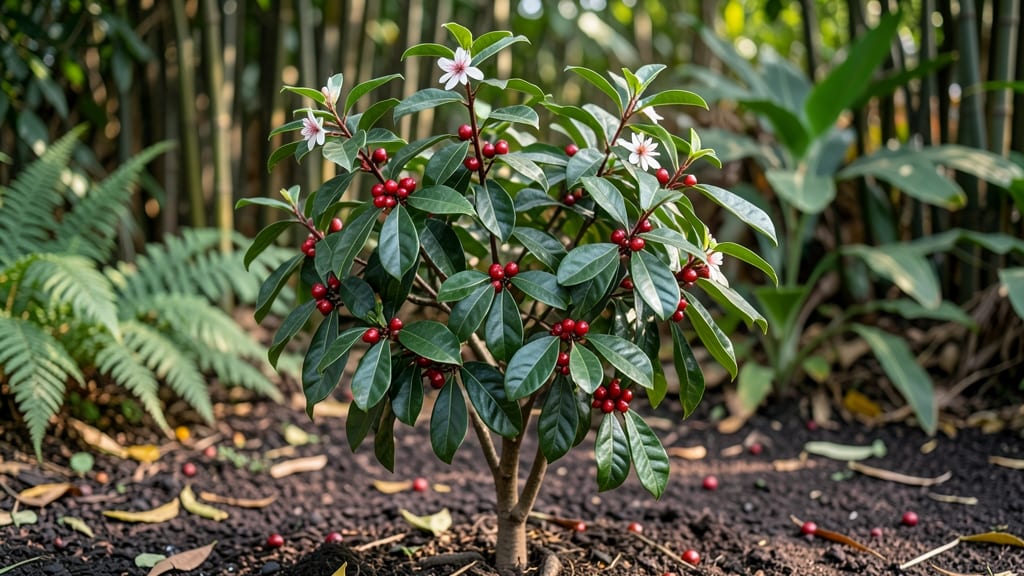
Wondering how tall your ☕ coffee plant could grow—and whether it’ll fit in your backyard or need a pruning plan? The answer isn’t as simple as you’d think, because coffee plants aren’t one-size-fits-all.
Some varieties stay compact enough for a sunny windowsill, while others stretch toward the sky like a small tree, reaching heights that’ll make your neighbors take notice.
The truth is, coffee plant growth depends on the variety you choose, where you live (those in USDA zones 10-12 have the advantage), and how you care for it.
Arabica plants, for example, often top out around 15-20 feet, while Robusta varieties can soar to 40 feet or more if left unchecked.
But don’t worry—with the right pruning and container tricks, you can keep even the tallest types manageable, whether you’re dreaming of a homegrown coffee harvest or just love the lush green leaves.
If you’re picturing a coffee plant that’s easy to maintain, the good news is that dwarf varieties exist—some staying as short as 6-10 feet—but they still need space to thrive. The key to controlling height lies in understanding your plant’s natural growth habits and learning when to trim.
Whether you’re a beginner or a seasoned gardener, this guide will help you navigate the coffee plant’s potential size and keep it at your ideal height, no matter your space.
Ready to turn your ☕ coffee plant into a manageable (and productive) part of your garden? Let’s break down the factors that influence its growth, the best ways to shape it, and how to avoid common mistakes that lead to runaway vines. Your perfect cup—and your backyard—will thank you.


Coffee plant height guide: from dwarf varieties to towering trees
Coffee plants are often misunderstood as delicate houseplants, but in reality, they can grow into tall, majestic trees—some reaching heights of 40 feet or more in ideal conditions.
The height of your coffee plant depends on its species, variety, and growing conditions, so let’s break down what to expect from seedling to maturity.
Most coffee plants belong to two primary species: Coffea arabica (Arabica) and Coffea canephora (Robusta). Arabica varieties tend to grow slightly taller, often reaching 15-40 feet in tropical climates, while Robusta varieties typically max out around 30 feet.
However, these are the heights you’d see on a commercial farm—home gardeners can influence their coffee plant’s growth significantly.
📊 Height Comparison Table
| Variety | Mature Height | Growth Rate | Best For |
|---|---|---|---|
| Dwarf Arabica (e.g., 'Nana') | 6–10 ft | Slow to moderate | Indoor pots, small gardens |
| Semi-Dwarf Arabica | 10–15 ft | Moderate | Backyard gardens, large containers |
| Standard Arabica (e.g., 'Bourbon') | 15–40 ft | Fast in ideal conditions | Tropical farms, large estates |
| Robusta (e.g., 'Congo') | 20–30 ft | Moderate to fast | Commercial farms, humid climates |
If you’re growing coffee plants indoors or in containers, their height will naturally be limited by their root space. A standard 5-gallon pot might keep a dwarf variety under 6 feet, while a 15-gallon container could accommodate a semi-dwarf up to 10 feet.
For outdoor plants, expect faster vertical growth—especially in warm, humid climates with full sun exposure.
Pruning plays a crucial role in managing height. Without regular pruning, even dwarf varieties can outgrow their intended space. I recommend pruning new growth in early spring to encourage bushier growth and control height.
For indoor plants, topping the plant (cutting the top stem) can promote lateral branching, keeping it compact.
Another factor influencing height is light exposure. Coffee plants thrive in bright, indirect light but can become leggy and tall if stretched toward a single light source. Rotate your plant quarter-turns weekly to ensure even growth. In low-light conditions, expect slower growth and potentially shorter mature heights.
For home gardeners in USDA Zones 10-12, outdoor coffee plants can grow year-round with minimal height restrictions. However, in cooler climates, they’ll need to be grown in containers and brought indoors during winter, which naturally slows their vertical growth.
Even in ideal conditions, it takes 3-5 years for a coffee plant to reach maturity, so patience is key!
If you’re planning to grow coffee for home brewing, focus on dwarf or semi-dwarf varieties like 'Nana' or 'Pacamara'. These stay manageable while still producing high-quality cherries.
For those with ample outdoor space, standard varieties like 'Bourbon' or 'Typica' can create a stunning shade tree while yielding coffee beans.
Remember, the healthier the plant, the better it will grow. Ensure your coffee plant has well-draining soil, consistent moisture, and protection from strong winds to avoid stunted growth.
With the right care, you can enjoy a coffee plant that fits your space—whether it’s a tabletop tree or a backyard giant.
🌳
How to control coffee plant height: pruning, training, and container tips
If your coffee plant is shooting up faster than you expected—or staying stubbornly small—don’t panic! With the right techniques, you can shape your coffee plant to fit your space, whether that’s a 6-foot indoor tree or a compact tabletop variety.
The key lies in pruning, training, and container selection, all of which directly influence how tall (or short) your plant grows over time.
First, let’s talk pruning, which isn’t just about trimming unsightly branches. Strategic pruning controls height, encourages bushier growth, and even boosts coffee cherry production. For example, pinching back the topmost growth (called the apical bud) forces the plant to branch out horizontally instead of shooting upward.
This is especially useful for dwarf varieties like Coffea arabica ‘Nana,’ which naturally stay under 6 feet but can still grow taller without guidance.
Next, consider training methods like espalier or staking. Espalier involves tying branches to a trellis or wall, guiding them into a flat, decorative shape—perfect for small gardens or urban balconies.
Staking, on the other hand, provides structural support for taller varieties, preventing them from toppling over while keeping their natural height in check. Both methods work best when started early, during the plant’s first year of growth.
Step-by-Step Pruning & Training Guide
- Step 1: Prune in Early Spring – Trim back overgrown branches by one-third to encourage new growth. Use sterilized pruners to avoid disease.
- Step 2: Pinch Apical Buds – Remove the topmost bud on young plants to promote bushier growth and prevent vertical stretching.
- Step 3: Train with Trellises or Stakes – For taller varieties, use soft ties to guide branches along a trellis or stake. Adjust as the plant grows.
- Step 4: Container Pruning – If growing in pots, prune roots every 2 years to prevent root-bound stress, which can stunt growth or make the plant grow too tall too fast.
- Step 5: Harvest Pruning – After harvesting cherries, trim spent branches to redirect energy to new growth and maintain shape.
Container size plays a huge role in controlling height. Coffee plants in small pots (under 12 inches) naturally stay shorter because root growth is restricted, which limits overall height. For dwarf varieties, a 10-12 inch pot is ideal, keeping them under 6 feet.
Meanwhile, standard varieties like Coffea canephora (Robusta) need larger containers (18+ inches) if you want them to reach their full 15-40 foot potential—but even then, regular pruning can keep them manageable.
Light exposure also tricks coffee plants into growing taller or shorter. Low light causes vertical stretching (called etiolation), while bright, indirect light promotes compact, bushy growth.
If your plant is reaching for the sky, move it to a sunnier spot (like an east or west-facing window) or supplement with a grow light for 6-8 hours daily. Avoid direct midday sun, which can scorch leaves and stress the plant.
Finally, fertilizer choices can influence height. High-nitrogen fertilizers (like those labeled 30-10-10) encourage leafy, lush growth but may lead to taller, leggier plants. Instead, opt for a balanced fertilizer (10-10-10) to promote steady, proportional growth.
Reduce fertilizer in winter months to slow growth and prevent your coffee plant from becoming unmanageable during dormancy.