
Planting
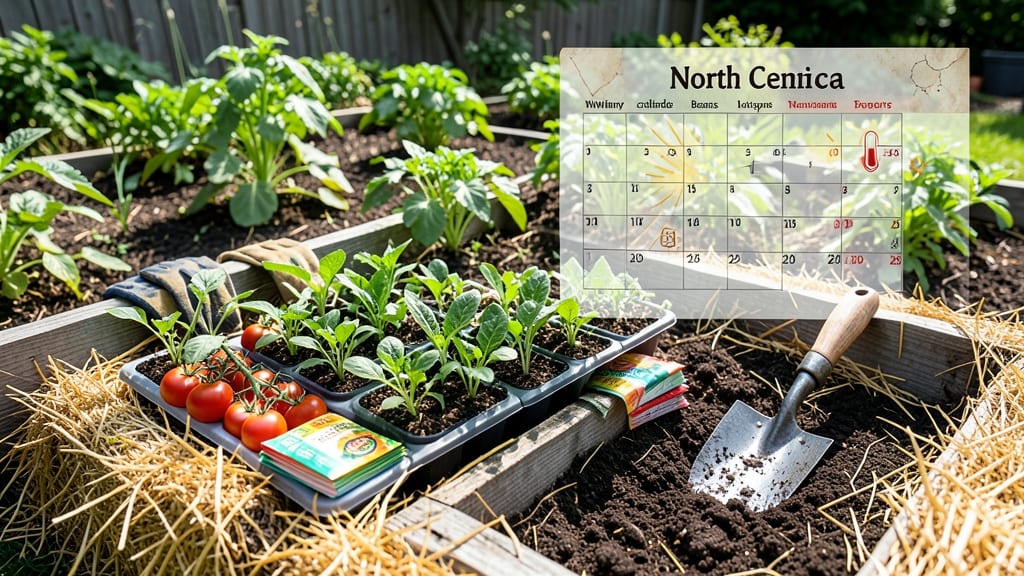
Timing your garden planting in North Carolina can feel like solving a puzzle—because the perfect window shifts dramatically from the coast to the mountains. One wrong move, and frost or sweltering heat can turn your hard work into a sad, wilted memory.
But here’s the good news: with the right county-specific dates, you can avoid those gardening disasters and grow a thriving 🌱 all season long.
Whether you’re in the Coastal Plain, the Piedmont, or the Mountains, knowing when to plant isn’t just about guessing—it’s about understanding your local frost risk.
I’ll break down exactly when to start seeds, transplant seedlings, and adjust for microclimates so your garden gets off to the best possible start.
Missed the spring window? No problem. I’ll also cover fall planting strategies to maximize your harvest before the first frost. By the end, you’ll know the exact dates to follow for your corner of North Carolina, ensuring your garden grows strong from the first spade to the last harvest.
Ready to stop second-guessing and start planting with confidence? Let’s dive into the county-by-county guide that’ll transform your garden from “meh” to “magical.”
NC county-specific planting dates by last frost risk (2024 guide)
North Carolina’s planting timeline varies dramatically from the coastal plain to the mountains, with last-frost dates spanning nearly a month. In Wilmington, you might plant tomatoes by March 15, while Asheville gardeners wait until May 1.
These differences mean selecting the right planting window for your county is critical to avoid frost damage or stunted growth.
Below, I’ve organized 2024 planting dates by NC region, including cool-season crops (like broccoli and spinach) that thrive in early spring and warm-season crops (tomatoes, peppers) that need soil warmed by summer.
Always check your local USDA Plant Hardiness Zone (NC ranges from Zone 7b to Zone 8a) for extra precision.
For coastal counties (e.g., Carteret, Craven), the average last frost falls between March 15–20, while Piedmont areas (e.g., Wake, Guilford) see their last frost around April 1–15.
Mountain regions (e.g., Haywood, Mitchell) can experience frost as late as May 15, making timing even more critical.
For cool-season crops, aim to plant 4–6 weeks before your last frost date.
For example, if your last frost is April 10, sow spinach or lettuce by March 1. Warm-season crops like tomatoes and peppers need soil temperatures above 60°F, so wait until 2 weeks after your last frost or use black plastic mulch to warm the soil faster.
Pro tip: Use a frost clock or local CoCoRaHS network data to track real-time frost risks in your area. These tools can adjust your planting timeline by 1–2 weeks compared to averages. For instance, 2023’s late spring frost in the Piedmont delayed planting by 10 days for many gardeners.
If you’re planting perennials or trees, the best time is early spring (before buds swell) or fall (6–8 weeks before first frost). For example, azaleas thrive when planted in October in the mountains or March in the coastal plain.
Always dig a hole twice as wide as the root ball to prevent root circling.
For fall gardens, focus on warm-season crops like sweet potatoes and collards. Plant these 60–90 days before your first frost—typically July–August for most of NC. In the mountains, where first frosts can arrive by October 15, start seeds indoors in June for a late harvest.
Remember: Soil temperature matters just as much as air temperature. Use a soil thermometer to confirm 50°F+ for cool crops and 60°F+ for warm crops. In sandy coastal soils, warm up faster than clay-heavy Piedmont soils, so adjust accordingly.
Finally, keep a gardening journal to track your local frost dates and planting success. Over time, you’ll refine your timeline to beat the NC climate’s unpredictability—whether it’s a late-spring frost or an
How to adjust planting times for NC’s microclimates and frost zones
North Carolina’s diverse microclimates mean a garden in Wilmington thrives months earlier than one in Asheville. The Coastal Plain enjoys earlier last-frost dates (mid-March), while the Mountains often face frost until May 15.
Understanding these variations lets you time plantings precisely—whether you’re sowing cool-season greens or warm-season tomatoes.
For high-frost-risk zones like the Blue Ridge Mountains, I recommend starting cool-season crops (e.g., kale, spinach) indoors by February 1 and using row covers to extend the season.
In milder Piedmont regions, you can direct-sow peas as early as February 15 without extra protection. The key? Know your microclimate—even neighboring counties can differ by 2-3 weeks.
To extend your growing season, I swear by seasonal extension tools. In frost-prone areas, low tunnels or cold frames can push spring plantings back by 4-6 weeks. For fall crops, row covers protect broccoli and cabbage until November 1 in the Piedmont.
Even a black plastic mulch warms soil 5-10°F faster, letting you plant tomatoes 2 weeks earlier in cooler zones.
Choose cold-hardy varieties for early plantings. Spinach, lettuce, and radishes tolerate light frosts, while peas and kale thrive in 30°F+ temps. In high-altitude gardens, opt for short-season varieties like ‘Early Girl’ tomatoes (55 days) or ‘Sugar Snap’ peas (60 days).
For warm-season crops, wait until soil temps hit 60°F—use a soil thermometer to avoid stunted growth.
Succession planting is my secret weapon for NC’s short growing seasons. In coastal areas, I sow lettuce every 2 weeks from February to October for continuous harvests. In mountain regions, I focus on fast-maturing crops like bush beans (50 days) and bok choy (30 days).
This ensures zero wasted space and fresh produce year-round, even with late frosts.
Don’t forget microclimates within your yard. A south-facing slope warms up 2-3 weeks earlier than a north-facing shady spot. I always plant heat-lovers (e.g., peppers, okra) near sunny walls or paved surfaces, which radiate heat.
For cool crops, shade cloth (30-50%) keeps leafy greens from bolting in summer’s 90°F+ heat.
When in doubt, use a frost clock or check NOAA’s frost probability maps. For Asheville, I aim for 90% frost-free confidence by May 1 before planting tomatoes, while in Wilmington, March 15 is safe for peppers.
Local Master Gardener extensions offer free frost data—always my go-to for hyper-local advice.