
Plants
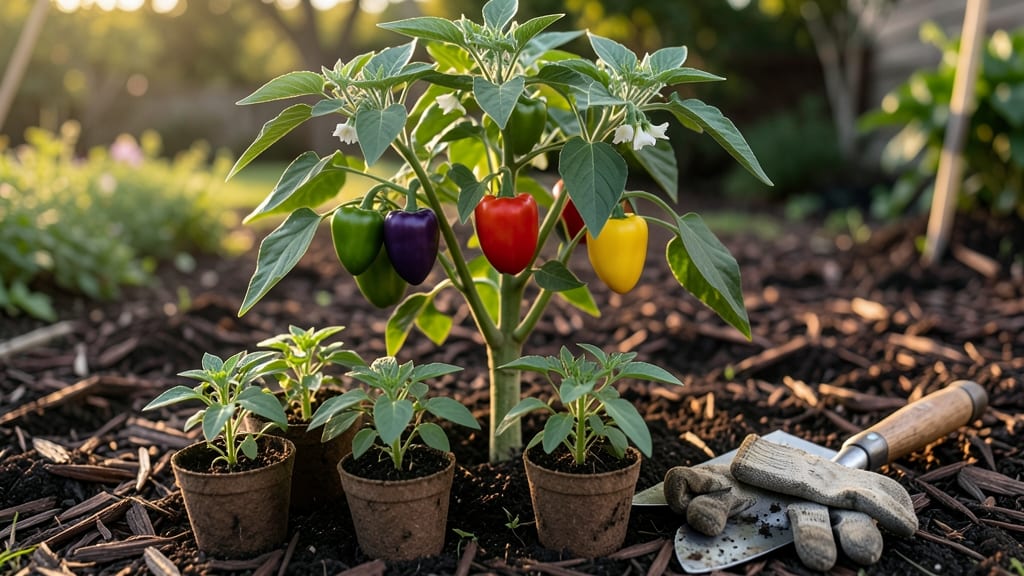
Planting your 🌶️ bell peppers at the wrong time in Arizona can mean the difference between a bountiful harvest and wasted effort.
Unlike cooler climates, the Low Desert and High Desert zones have very different windows for success—wait too long, and the heat will stress your plants before they even take root.
I’ve learned the hard way that soil temperature matters more than calendar dates. You’ll want to transplant once the ground hits a steady 70°F, typically between late February and early March for most of the state.
This timing ensures your peppers thrive during Arizona’s 100°F+ summers instead of wilting before they fruit.
But here’s the catch: direct sowing works best in February or March, while transplants need that warmer soil to avoid shock. I’ll break down exactly when to start seeds indoors versus planting outdoors, plus how to adjust for microclimates like Phoenix versus Flagstaff.
Ready to grow sweet, prolific peppers all season? Let’s dive into the best strategies for Arizona’s unique growing conditions—no guesswork required.
Optimal transplant dates for bell peppers in Arizona’s climate zones
Arizona’s diverse climate zones—from the Low Desert (Phoenix, Tucson) to the High Desert (Flagstaff, Prescott)—create wildly different planting windows for bell peppers.
In the Low Desert, where frost is rare and heat arrives early, your transplant window opens as soon as soil hits 70°F, typically mid-February to early March. Meanwhile, High Desert gardeners should wait until late March to early April, when nighttime temps stabilize above 50°F.
These differences aren’t just about dates; they’re about avoiding heat stress in transplants or cold damage from lingering frosts.
For direct sowing (planting seeds straight into the ground), Low Desert gardeners can start in late February, while High Desert gardeners should wait until mid-April. Direct-sown seeds need consistent warmth to germinate—cold soil will leave you waiting weeks for sprouts.
If you’re unsure about your local microclimate, check the Arizona AgriWeather tool for real-time soil temps in your area.
Here’s the golden rule: Never transplant when nighttime temps dip below 55°F. Bell peppers are tender annuals and will bolt (produce flowers prematurely) or rot if shocked by cold.
In the Low Desert, this means planting after Valentine’s Day is a safe bet, but High Desert gardeners should hold off until after Easter. Pro tip: Use row covers for a few nights post-transplant to protect young plants from unexpected chilly snaps.
Another critical factor is Arizona’s monsoon season, which typically kicks in mid-July. If you plant too late (after mid-April in the Low Desert or mid-May in the High Desert), your peppers may struggle with excess humidity and fungal diseases like powdery mildew.
Balance is key—aim to have peppers established 2–3 weeks before monsoon rains to give them time to root deeply before the deluge.
| Climate Zone | Transplant Window | Soil Temp Threshold | Direct Sow Window | Key Risk |
|---|---|---|---|---|
| Low Desert (Phoenix, Tucson) | Mid-February to early March | 70°F+ | Late February to early April | Heat stress if planted too late |
| High Desert (Flagstaff, Prescott) | Late March to early April | 65°F+ | Mid-April to early May | Frost damage if planted too early |
| Transition Zones (Sedona, Yuma) | Early March to mid-March | 68°F+ | Late March to early April | Variable microclimates |
If you’re starting seeds indoors to get a jump on the season, begin 8–10 weeks before your target transplant date. For Low Desert gardeners, that means mid-December to early January; High Desert gardeners should start seeds in late January.
Use grow lights to supplement the short winter days, and keep seedlings in a warm (70–75°F) spot until they’re ready to harden off. Hardening off—acclimating seedlings to outdoor conditions—should take 7–10 days before transplanting.
For gardeners in transition zones (like Sedona or Yuma), timing is trickier due to microclimates.
A valley near Phoenix might be ready to plant in late February, while a higher-elevation spot in the same county could still be too cold. Solution: Plant a test row of fast-maturing varieties (like ‘Early Cal Wonder’) 2 weeks before your planned transplant date.
If they thrive, it’s safe to proceed with your main crop.
One Arizona-specific hack to extend your transplant window? Black plastic mulch. Laying down black plastic 2–3 weeks before planting raises soil temps by 10–15°F, letting you transplant earlier in the Low Desert or later in the High Desert without risking cold damage.
Just remember to remove the mulch once temps exceed 90°F to prevent overheating roots.
Finally, don’t forget about succession planting. Bell peppers take 75–90 days to mature, so plan 2–3 transplant waves spaced 2 weeks apart to ensure a continuous harvest.
Your last transplant should go in by mid-May in the Low Desert or early June in the High Desert to avoid the worst of the summer heat and monsoon humidity.
Timing your bell pepper transplants in Arizona isn’t just about dates—it’s about reading your microclimate, preparing your soil, and adapting to Arizona’s quirks. Get it right, and you’ll be feasting on homegrown peppers from June through October.
Get it wrong, and you’ll be staring at sad, stunted plants—or worse, a blank garden bed. 🌶️
Optimal transplant dates for bell peppers in Arizona’s climate zones
Arizona’s diverse microclimates mean your bell pepper transplant timing depends on whether you’re in the Low Desert (Phoenix, Tucson) or High Desert (Flagstaff, Prescott). Low Desert gardeners enjoy a longer growing season, while High Desert areas face cooler nights and earlier frosts.
Aim to transplant when soil hits 70°F—bell peppers hate cold soil and will rot or stunt.
In the Low Desert, start transplants as early as late January to early February under protective covers. By mid-March, daytime highs consistently exceed 80°F, creating ideal conditions. High Desert gardeners should wait until mid-April to early May when frost risk drops below 10% and soil warms reliably.
Use black plastic mulch to accelerate soil warming by 5–10°F in just days. This trick is especially valuable in High Desert zones where spring soil lingers near 55°F.
For direct sowing, wait until after April 15 in Low Desert areas or May 15 in High Desert regions to avoid seedling shock from temperature swings.
| Zone | Transplant Window | Soil Temp Threshold | Frost Risk | Pro Tip |
|---|---|---|---|---|
| Low Desert (Phoenix, Tucson) | Late Jan–Early Mar (covered) / Mid Mar–Apr (uncovered) | 70°F+ | Minimal (Dec–Jan) | Use shade cloth 30% for seedlings |
| High Desert (Flagstaff, Prescott) | Mid Apr–Early May | 70°F+ (warmed with mulch) | Moderate (Nov–Apr) | Pre-warm soil with black plastic 2 weeks prior |
| Elevation 4,000–6,000 ft | Late Apr–May 15 | 65°F+ (with mulch) | High (Nov–May) | Start seeds indoors 8–10 weeks early |
For successive planting, stagger transplants every 2–3 weeks through April in Low Desert areas. This extends your harvest window until October when temperatures dip below 85°F. High Desert gardeners can push a second planting in early June for a late-summer harvest before monsoon rains slow growth.
Monitor your local Almanac frost dates—Arizona’s first frost rarely occurs before December in Low Desert zones, but High Desert areas can see frost as early as October at higher elevations.
Use a minimum thermometer buried in soil to track overnight lows and protect young plants with row covers if needed.
Pro tip: Heat-tolerant varieties like ‘NuMex Heritage’ or ‘Carmen’ thrive in Arizona’s 100°F+ afternoons. Pair them with drip irrigation to keep roots cool and mulch to retain moisture. With the right timing, you’ll enjoy peppers from June through October—just in time for summer salsas! 🌶️