
Plants
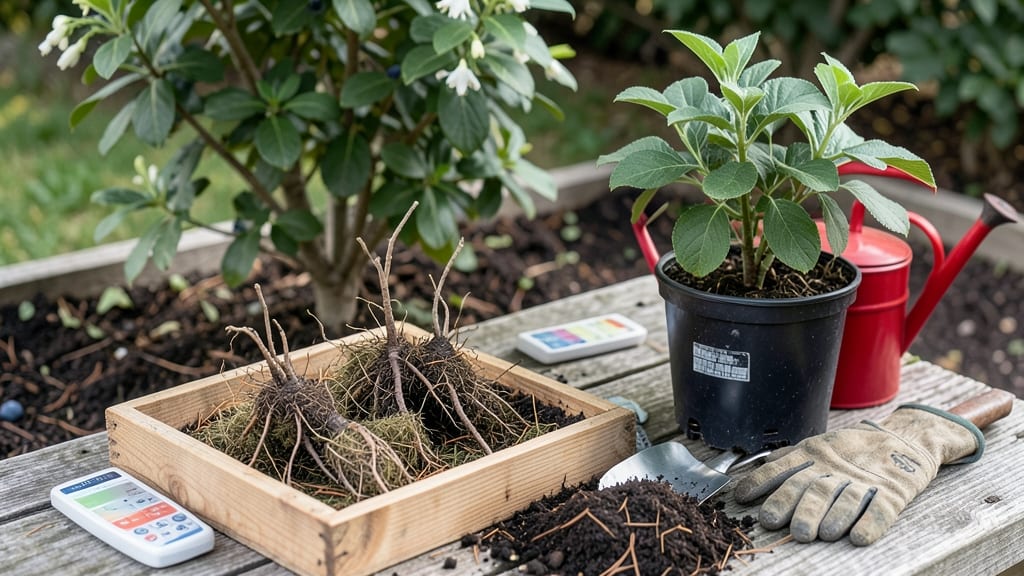
Planting your 🫐 blueberry bushes at the right time in North Carolina isn’t just about the calendar—it’s about matching your variety to the chill hours your region actually delivers.
Get it wrong, and you’ll either fry your bushes in summer heat or watch them fail to fruit because they didn’t get enough winter cold. The good news? With NC’s diverse zones—from coastal warmth to mountain chill—there’s a perfect window for every type.
Most gardeners in NC swear by fall planting (September-October), when soil stays warm enough for roots to establish before winter sets in. But spring (February-April) works too, especially for rabiteye varieties that thrive in the Piedmont’s milder winters.
The key is knowing your last frost date—whether you’re in Zone 6a’s chilly valleys or Zone 8b’s balmy coast—and how many cold hours your bushes actually need to set fruit.
I’ll break down the exact timing for Southern Highbush, Rabbiteye, and half-high varieties, plus how to prep your soil for NC’s acidic-loving 🫐 blueberry bushes. Spoiler: Skipping the pH test is the fastest way to turn your $50 bush into a $5 science experiment.
Let’s get your planting schedule locked in before the next frost.
By the end, you’ll know not just when to plant, but how to give your bushes the head start they need—whether you’re tucking them into a container on your balcony or digging a full sunbed in your backyard. No more guessing games, just bigger harvests next summer.
NC planting timeline by blueberry variety and chill-hours
North Carolina’s three distinct climate zones—Coastal, Piedmont, and Mountains—mean frost dates vary dramatically. For example, the Mountains (Zone 6a) see last frosts around March 15, while the Coastal Plain (Zone 8b) warms up by February 15.
Matching your blueberry variety to these zones is critical, as chill-hour requirements determine whether your bushes will fruit reliably.
Southern Highbush varieties (like ‘Duke’ or ‘Climax’) thrive in NC’s warmer zones with 400-600 chill hours, while Rabbiteye types (e.g., ‘Powderblue’) need 300-500 chill hours and handle the Mountains better.
Planting at the wrong time—like spring-planting Rabbiteye bushes in the Piedmont—can lead to poor root establishment before summer heat sets in.
Fall planting (September-October) is ideal for most NC gardeners because cooler soil temperatures reduce transplant shock, and bushes can establish roots before winter dormancy. Spring planting (February-April) works for bare-root plants but requires constant moisture to prevent drought stress as temperatures rise.
Here’s how to align your variety with NC’s frost-free windows and chill-hour needs for a bountiful harvest:
| Variety Type | Chill-Hour Range | Best NC Zones | Fall Planting Window | Spring Planting Window | Key Notes |
|---|---|---|---|---|---|
| Southern Highbush | 400-600 | Coastal (8a-8b), Piedmont (7a-7b) | Mid-Sept to Oct 15 | Feb 15 - March 15 | Needs acidic soil; fruiting in Year 2-3 |
| Rabbiteye | 300-500 | Mountains (6a-7a), Piedmont (7a) | Late Sept - Oct 30 | March 1 - April 15 | Taller; tolerates colder winters |
| Half-High | 500-700 | Piedmont (7a-7b), Coastal (8a) | Sept 15 - Oct 15 | Feb 28 - March 30 | Compact; great for containers |
For Coastal NC gardeners (Zone 8b), prioritize Southern Highbush varieties like ‘Peach Sorbet’ or ‘O’Neal’, which fruit earlier in the season. In contrast, Mountain growers (Zone 6a) should opt for Rabbiteye types like ‘Tifblue’ or ‘Centennial’ to meet their higher chill-hour needs.
Always check your local frost dates using the NC State Climate Office or Almanac’s Frost Calculator.
Pro tip: If you’re in the Piedmont (Zone 7a), where frost dates can swing wildly, fall planting by October 15 gives bushes time to root before winter. Spring planting here risks heat stress if done after March 15.
For container planting, adjust timing by 2-4 weeks earlier—containers heat up faster and dry out quicker.
One common mistake NC gardeners make is planting bare-root bushes in summer. These plants need cool soil temperatures (below 80°F) to establish roots. If you miss the fall window, wait until next spring—but be ready to water deeply 2-3x per week until roots catch up.
Remember: Blueberries are perennial, so proper planting timing now means decades of harvests. Start with the right variety for your zone, plant in the optimal window, and your bushes will reward you with juicy berries for years. 🫐
NC planting timeline by blueberry variety and chill-hours
North Carolina’s three distinct climate zones—Coastal, Piedmont, and Mountains—each demand different planting strategies for blueberries.
The key factor? Chill hours, which determine whether your bushes will bloom and fruit properly. Southern Highbush varieties (like 'Southern Blue' or 'O'Neal') need 400-600 chill hours, while Rabbiteye types (such as 'Climax' or 'Powderblue') thrive with 300-500 chill hours.
Coastal NC often has fewer chill hours, so choose varieties accordingly.
For fall planting (ideal for NC), aim for September-October—this gives roots time to establish before winter. Spring planting (February-April) works too, but avoid planting when frost is still a threat.
In Zone 8b (Coastal), where winters are mild, spring planting is safer. In Zone 6a (Mountains), fall planting is critical to avoid early spring frosts.
| Variety Type | Chill Hours Needed | Best NC Zones | Optimal Planting Window |
|---|---|---|---|
| Southern Highbush | 400-600 | Coastal (8a-8b) | Fall (Sept-Oct) or Spring (Feb-Mar) |
| Rabbiteye | 300-500 | Piedmont (7a-7b) | Fall (Sept-Oct) only |
| Half-High | 500-700 | Mountains (6a-6b) | Fall (Aug-Sept) |
Your last frost date is critical: Plant 4-6 weeks before in fall to ensure roots establish. For example, in Zone 7a (Piedmont), with a last frost around March 1, aim for September 15-October 15 planting.
In Zone 8b (Coastal), where frost is rare, spring planting (February-March) is often safer to avoid summer heat stress.
Pro tip: Container-grown blueberries can be planted slightly later than bare-root plants, as their roots are already established. If you’re in Zone 6a (Mountains), prioritize fall planting—spring frosts can damage tender new growth.
Always check your local Cooperative Extension Service for precise frost dates in your specific NC county.
Once you’ve matched your variety to chill hours and planting window, focus on soil prep. Blueberries demand acidic soil (pH 4.5-5.5)—test your soil before planting.
If your garden soil is too alkaline, amend it with sulfur or peat moss at least 2 months before planting to avoid shocking the roots.
Remember: Established bushes in NC can produce fruit as early as Year 2 if planted correctly. But timing is everything—get it right, and you’ll enjoy juicy NC-grown blueberries for decades. 🫐