
Trees
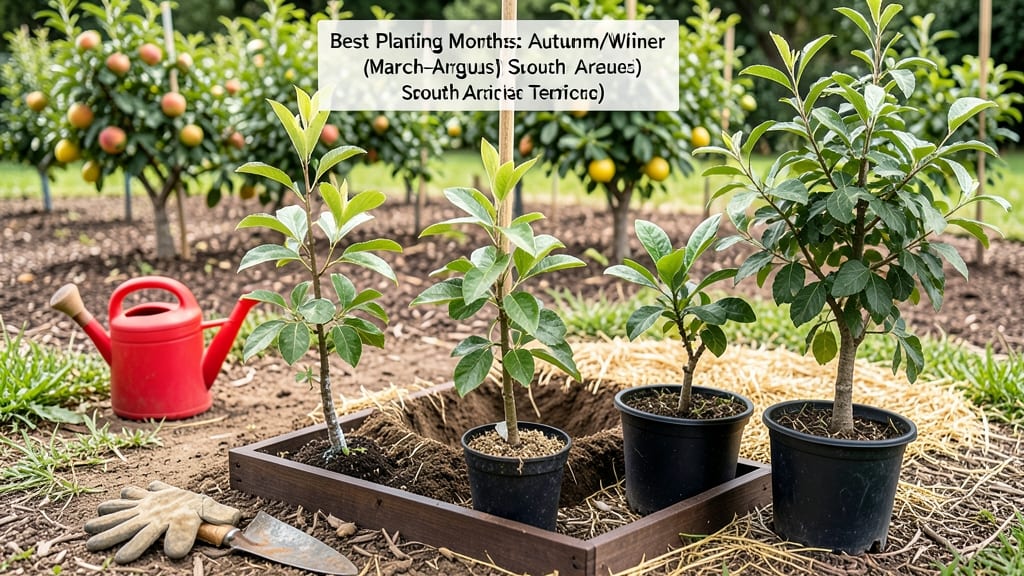
Planting a fruit tree 🍎 in South Africa at the wrong time could mean struggling with stunted growth or even losing your young sapling—yet most gardeners don’t realize how much regional climate affects the best window.
If you’ve ever wondered why some trees thrive while others fail, the answer often lies in timing. South Africa’s diverse zones—from subtropical coasts to cooler highlands—demand different planting strategies, and getting it right can mean the difference between a bountiful harvest and years of disappointment.
I’ll break down the exact months to plant by region, including how to avoid common mistakes like planting too late in frost-prone areas or ignoring soil needs for citrus varieties.
Whether you’re in the 9a-10a zones or summer-rainfall regions, these insights will help you choose the perfect time for your fruit tree’s success.
Ready to set your orchard up for long-term growth? Let’s dive into the climate-smart planting calendar that works for South Africa’s unique growing conditions.
Optimal planting months for fruit trees by South Africa’s climate zones
South Africa’s diverse climate zones—from subtropical KwaZulu-Natal to the arid Western Cape—create distinct planting windows for fruit trees. Unlike temperate regions, most areas enjoy year-round growing seasons, but timing still matters to avoid heat stress or dormancy periods.
For example, citrus thrives in winter planting (May-July), while stone fruits like peaches prefer autumn (March-May) to establish roots before summer heat.
Your local rainfall pattern is the biggest factor. In summer-rainfall regions (e.g., Gauteng, Mpumalanga), plant in late autumn or winter (April-June) when soils are moist. In winter-rainfall areas (e.g., Western Cape), aim for early spring (August-September) to align with natural water cycles.
Even a 2-month difference can affect root establishment and fruit yield.
🌱Key rule: Always plant when soil temperatures are above 15°C (59°F)—use a soil thermometer if unsure. Bare-root trees (like peaches or plums) need cooler soils (10-15°C) to prevent root desiccation, while container-grown trees (e.g., avocados) tolerate warmer soils year-round.
In subtropical zones like KwaZulu-Natal, winter planting (May-July) aligns with cooler temperatures and higher humidity, reducing transplant shock. I’ve seen citrus trees planted in summer (December-February) struggle with root rot due to waterlogged soils—always prioritize well-draining soil in these areas.
For stone fruits (peaches, nectarines), autumn planting (March-May) gives roots time to establish before summer’s 30°C+ heat.
🌡️Pro tip: Use a soil moisture meter to check readiness. If the top 15cm of soil feels dry, wait 1-2 weeks—especially in sandy soils (common in the Western Cape). In clay-heavy soils (e.g., Gauteng), plant when rainfall is forecasted to avoid compaction.
Frost is rarely a concern in most of South Africa, but high-altitude areas (e.g., 1,500m+ in the Drakensberg) can experience light frosts (below 0°C).
If planting temperate fruit trees like apples or cherries, choose frost-hardy varieties (e.g., Anna or Starking) and plant in sheltered microclimates near buildings or slopes that radiate heat at night.
Container-grown trees offer flexibility—you can plant them year-round in subtropical zones, but avoid peak summer (December-February) in arid regions like the Northern Cape. I once planted a container avocado in January near Johannesburg and lost it to heat stress within weeks.
Always acclimate container trees for 1-2 weeks before transplanting to match outdoor conditions.
💡Region-specific hack: In the Western Cape, mulch with gravel (not organic mulch) to prevent fungal diseases in winter-rainfall conditions. For Gaut
How to avoid common mistakes when planting fruit trees in South Africa
Planting fruit trees in South Africa seems straightforward, but timing mistakes and soil missteps can derail your orchard before it even starts. I’ve seen gardeners in KwaZulu-Natal lose young citrus trees to overwatering in summer, while others in the Western Cape struggle with acid-loving peaches planted in alkaline soil.
Let’s fix these before they happen.
One of the biggest errors is planting bare-root trees in summer. The heat stress can kill tender roots before they establish. Instead, aim for winter planting (May-July) when soil is cool and moisture is consistent.
Container-grown trees are more flexible—you can plant them year-round, but avoid extreme heat or frost periods.
Ignoring soil pH is another silent killer. Citrus trees, for example, thrive in acidic soil (pH 5.5-6.5), while stone fruits like peaches prefer slightly acidic to neutral (pH 6.0-7.0). A simple soil test kit (costing under R50) can save you from years of poor yields. If your soil is too alkaline, amend it with sulfur or peat moss before planting.
Here’s what not to do when planting fruit trees in South Africa’s diverse climates:
Avoid These Planting Pitfalls
- Planting in frost-prone areas without protection (e.g., peaches in the Highveld)
- Overwatering young trees during South Africa’s hot, dry summers
- Skipping root pruning when transplanting container-grown trees
- Using fresh manure near the root zone (burns roots)
- Planting too deep (root flare should be above soil level)
Another critical mistake is planting too close to structures. Fruit trees need space for airflow to prevent fungal diseases like anthracnose (common in humid regions). Give citrus trees at least 4 meters of clearance, while stone fruits need 6 meters to thrive.
In urban gardens, consider dwarf varieties or espalier techniques to save space.
For gardeners in summer-rainfall areas (e.g., Eastern Cape), planting in autumn (March-April) lets roots establish before the wet season. But in winter-rainfall zones (e.g., Western Cape), spring planting (August-September) aligns with natural water cycles. Always check your local agricultural extension office for region-specific advice.
Finally, transplant shock is a real threat. Even healthy trees can struggle if their roots are damaged during moving. To minimize stress, prune roots by 1/3 before planting and water deeply immediately after.
A mulch ring (5-10cm thick) helps retain moisture and regulates soil temperature—critical in South Africa’s variable climates.