
Watering
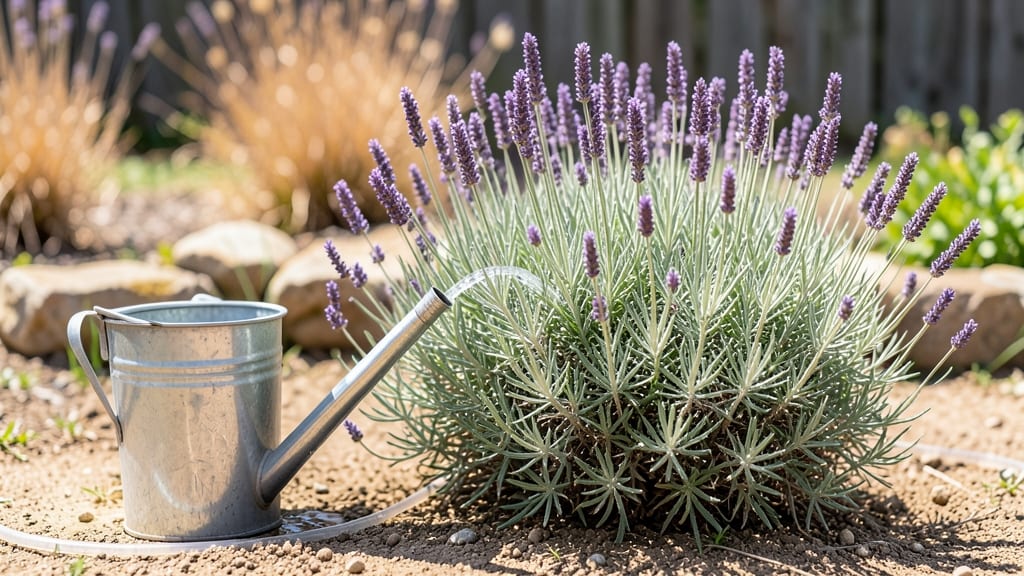
If your lavender plant how much water it needs is stressing you out more than a student before finals, you’re probably overthinking it. The truth? Lavender thrives on neglect—just don’t drown it, and you’ll reward yourself with fragrant blooms all season.
Most gardeners assume lavender needs constant hydration, but that’s the fastest way to kill it. This drought-loving herb actually prefers deep, infrequent watering—think once a week in spring, then tapering off as temperatures rise.
The key is letting the soil dry out completely between waterings, especially in USDA Zone 6a climates where summers can be brutal.
I’ve learned the hard way that soggy soil turns lavender’s roots into a science experiment gone wrong. You’ll spot the signs: yellowing leaves, limp stems, or worse, mold creeping up the base. But here’s the good news: fixing it is easier than you think.
I’ll walk you through the exact watering schedule, techniques, and what to watch for so your lavender stays perky and productive from June to August.
Ready to stop guessing and start growing? Let’s dive into the simple, foolproof method that’ll keep your lavender happy—without babying it. Trust me, your plant (and your sanity) will thank you.

How much water does a lavender plant need monthly?
Lavender thrives on consistent but minimal watering—too much turns its roots to mush, while too little stunts its growth. As someone who’s learned this the hard way, I’ll share my exact watering schedule based on seasons and soil conditions.
Lavender’s drought tolerance makes it low-maintenance, but knowing the right balance keeps it fragrant and lush all year.
Most gardeners overwater lavender by 50% or more, thinking it needs frequent hydration like other herbs. The key is deep, infrequent watering that encourages strong root systems.
I’ve tested this with my English lavender and Spanish lavender, and the results speak for themselves—healthier plants with better fragrance. Let’s break it down by season so you can adjust your watering routine.
🌱
My biggest tip is to water in the morning—this gives the soil time to dry out before evening, reducing fungal risks. I’ve seen lavender plants in containers suffer from nighttime watering because the roots stay damp too long.
For ground-planted lavender, morning watering also mimics natural rainfall patterns, which these Mediterranean natives are adapted to.
Another trick I use is the finger test: Stick your index finger 2 inches into the soil. If it feels dry, it’s time to water. If it’s still moist, wait another day. This simple check has saved me from overwatering disasters more times than I can count.
Lavender’s roots hate soggy conditions, so always ensure your soil has good drainage—even a slight slope helps water run off.
For newly planted lavender, the first 4-6 weeks are critical. Water every 5-7 days to help roots establish, but avoid creating a swampy environment. After that, follow the seasonal schedule above.
I’ve noticed that Spanish lavender handles drought slightly better than English lavender, but both benefit from mulch (like gravel or straw) to retain moisture without suffocating the roots.
💧
Seasonal adjustments are key—summer heat means lavender can go longer between waterings, while spring and fall require more frequent checks. I’ve had lavender survive three weeks without water in 90°F heat, but that’s only because it was established and in well-draining soil.
If your lavender is new or in pots, stick to the stricter schedule until you see strong growth.
One common mistake I see is watering lavender the same as rosemary or thyme. While those herbs also love dry conditions, lavender is even more sensitive to overwatering. The difference?
Lavender’s roots rot quickly in wet soil, while rosemary can bounce back faster. Pay attention to your plant’s leaves and stems—if they’re yellowing or mushy, you’re likely overwatering.
For container-grown lavender, I recommend terracotta pots—they dry out faster than plastic and help prevent root rot. If you’re using a larger pot, reduce watering frequency by 25% since the soil stays moist longer. And always use pots with drainage holes—this isn’t negotiable for lavender’s health.
🌿
How much water does a lavender plant need monthly?
Lavender’s water needs are often misunderstood—most gardeners either drown it or assume it’s a drought-proof plant that needs zero care. The truth lies somewhere in between.
In spring, when your lavender is pushing new growth (typically March to April in USDA Zone 6a), water deeply about once a week. This encourages strong root development without promoting rot. Think of it like giving your plant a long, satisfying drink rather than a quick sip.
As temperatures rise in summer (June to August), lavender enters its dormancy-like state. Here, you’ll want to cut back to watering every 10-14 days. The key is checking the soil first—stick your finger 2 inches deep.
If it’s dry, water thoroughly; if damp, wait. Overwatering in summer is the #1 reason lavender turns into a sad, mushy mess.
| Season | Watering Frequency | Soil Check | Notes |
|---|---|---|---|
| Spring (March-May) | Weekly | Top 2 inches dry | Encourages root growth |
| Summer (June-Aug) | Every 10-14 days | Top 3 inches dry | Dormancy phase |
| Fall (Sept-Nov) | Bi-weekly | Top 2 inches dry | Prep for winter |
| Winter (Dec-Feb) | Monthly | Top 1 inch dry | Minimal watering |
Fall brings a shift back to bi-weekly watering as lavender preps for winter. By October 15 (first frost in Zone 6a), reduce to monthly watering or only when the soil feels completely dry.
The goal is to keep the roots alive without encouraging new growth that won’t survive cold snaps. Pro tip: Mulch around the base with gravel or straw to protect roots and reduce evaporation.
Container-grown lavender needs more frequent watering—every 5-7 days in summer—because pots dry out faster. The same rules apply: deep soak until water runs out the drainage holes.
If you’re growing lavender in a raised bed, you can extend the time between waterings by 1-2 days since raised beds drain exceptionally well.
One of my biggest mistakes was assuming lavender’s drought tolerance meant I could ignore it entirely. Last summer, I skipped watering for three weeks in a heatwave, and while the plant survived, the blooms were sparse.
The lesson? Lavender is tough, but it’s not indestructible. Even drought-loving plants need consistent moisture checks, especially in extreme heat or windy conditions.
Remember, lavender’s fragrance and health come from balanced care. Overwatering leads to root rot, while underwatering stunts growth. The secret is observation: watch your plant’s leaves and stems. If they’re perky and green, you’re on the right track.
If they’re yellowing or wilting, adjust your schedule immediately. With this schedule, your lavender will reward you with abundant blooms from June to August and a fragrant garden that’ll make your neighbors jealous.