
Plants
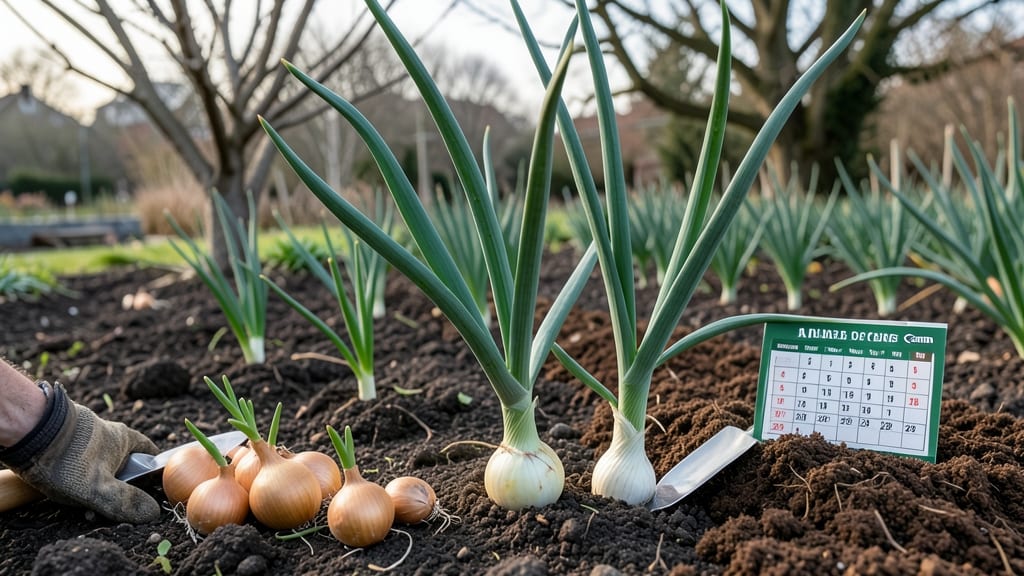
Timing your 🧅 onion planting in Oklahoma isn’t just about following a calendar—it’s about outsmarting the state’s unpredictable swings from frosty mornings to scorching afternoons. Miss the window, and you’ll end up with bolted greens instead of plump bulbs, or worse, a harvest that never comes.
The key lies in planting either in early spring (March-April) or late summer (August-September), when soil temperatures and frost dates align just right for your USDA zone.
Let’s cut through the guesswork: whether you’re growing from sets or seeds, Oklahoma’s 6a-8a zones demand precision. Plant too early, and a late freeze will stall growth; too late, and summer heat sends onions bolting before they bulb.
I’ll walk you through the exact months that work—and why they matter for your specific region, from the Panhandle’s cooler climate to the humid South.
You’ll also discover how to prep your soil, choose the right varieties for Oklahoma’s heat, and use mulch to protect your crop from erratic weather. No more wasted effort or disappointed harvests—just reliable, homegrown onions that taste better than anything you’ll find in a store.
Ready to turn your garden into a onion powerhouse?
From frost dates to companion plants, I’ve got the insider tips that’ll have you harvesting crisp, sweet 🧅 bulbs by mid-summer. Let’s get those onions in the ground the right way—no more second-guessing, just results.
Best planting months for onions in Oklahoma: fall vs. spring guide
Oklahoma’s USDA zones 6a-8a create a perfect window for growing onions, but timing is critical. The last frost date typically falls around March 15, while the first frost arrives by November 15. This gives you two prime planting opportunities: early spring and late summer/fall.
For spring onions, aim to plant 4-6 weeks before your last frost, usually between February and early April. This ensures bulbs mature before Oklahoma’s hot summer heat stresses them.
Meanwhile, fall planting works best from August to early October, allowing onions to establish roots before winter dormancy.
Here’s the key difference: Spring plantings yield larger bulbs ready for mid-to-late summer harvests, while fall plantings produce smaller, sweeter onions harvested in late spring. Both methods work in Oklahoma, but your choice depends on your preferred harvest time and variety.
Soil temperature is another critical factor. Onions thrive when soil stays between 45°F and 75°F. In Oklahoma’s northern zones (6a-7a), cooler soils may delay spring planting until late March or April, while southern zones (7b-8a) can start as early as February.
| Planting Method | Ideal Planting Window | Soil Temp Requirement | Harvest Time | Best For |
|---|---|---|---|---|
| Spring Sets | February–March (North OK) January–February (South OK) |
45°F–60°F | June–August | Large bulbs, storage onions |
| Spring Transplants | March–April | 50°F–65°F | July–September | Longer growing season |
| Fall Sets | August–September | 60°F–75°F | April–May | Early sweet onions |
| Fall Transplants | September–October | 55°F–70°F | May–June | Mild winter survival |
If you’re planting from seeds instead of sets, start them indoors 8–10 weeks before your last frost (around January) for spring harvests. For fall plantings, direct-sow seeds in late summer to avoid bolting (flowering prematurely) from heat stress.
Oklahoma’s microclimates add another layer of complexity. Areas like the Arkansas River Valley (zone 7b) can handle earlier plantings, while the Panhandle region (zone 6a) may need to wait until mid-April to avoid late frosts. Always check your local Cooperative Extension Service for precise frost dates.
Pro tip: Use mulch (straw or grass clippings) to regulate soil temperature. In spring, mulch keeps roots cool; in fall, it insulates against winter chill. This simple trick extends your planting window by 2–3 weeks in both directions.
For container growing, plant sets in March or August using pots with at least 6-inch depth. Containers warm up faster in spring, so start them indoors until soil temperatures stabilize above 50°F.
Remember, onions are cool-season crops, so they’ll bolt (go to seed) if exposed to consistent temperatures above 80°F. In Oklahoma’s summer heat, focus on shade cloth or drip irrigation to keep foliage cool and soil moist.
🌱
Best planting months for onions in Oklahoma: fall vs. spring guide
Oklahoma’s USDA zones 6a-8a mean your onion planting window depends on whether you prefer spring or fall harvests. For most gardeners, early spring (March-April) or late summer (August-September) are the sweet spots—but timing varies by region.
Northern Oklahoma’s cooler microclimates may shift your window by 2-3 weeks earlier than southern areas.
Spring planting dominates for home gardeners because it aligns with soil warming trends. Aim to plant 4-6 weeks before your last frost date (typically mid-March in most areas). Fall planting, however, lets you harvest earlier in spring and avoids summer bolting (when onions flower prematurely).
| Planting Window | Best Months | Soil Temp Requirement | Harvest Time | Oklahoma Notes |
|---|---|---|---|---|
| Spring Planting | February–April | 40–50°F (4–10°C) | June–August | Northern OK: Start by March 1; Southern OK: February 15 works. |
| Fall Planting | August–September | 50–60°F (10–15°C) | April–May | Plant 8–10 weeks before first frost (typically late August). |
For spring planting, focus on short-day onion varieties like ‘Texas Early White’ or ‘Candy’—they handle Oklahoma’s heat better. Start seeds indoors 8–10 weeks before transplanting (around January) if you want a head start. Direct sowing works too, but use seed sets (small dried onions) for faster results.
Fall planting requires longer-day varieties like ‘Yellow Granex’ to prevent bolting. Plant 8–10 weeks before your first frost (usually late August), but avoid planting too early—cool soil in July can stunt growth. Mulch heavily after planting to insulate roots from temperature swings common in Oklahoma’s fall.
Pro tip: Check your local frost dates using the Oklahoma Mesonet for precise timing. Northern Oklahoma’s USDA zone 6a may need to plant 2 weeks later than southern zone 8a areas. Adjust based on your microclimate—valleys stay cooler, while hilltops warm faster.
Remember, soil temperature matters more than air temperature. Use a soil thermometer to confirm 40–50°F (4–10°C) for spring planting and 50–60°F (10–15°C) for fall. If soil stays too cold, onions won’t sprout properly—wait until conditions improve.