
Plants
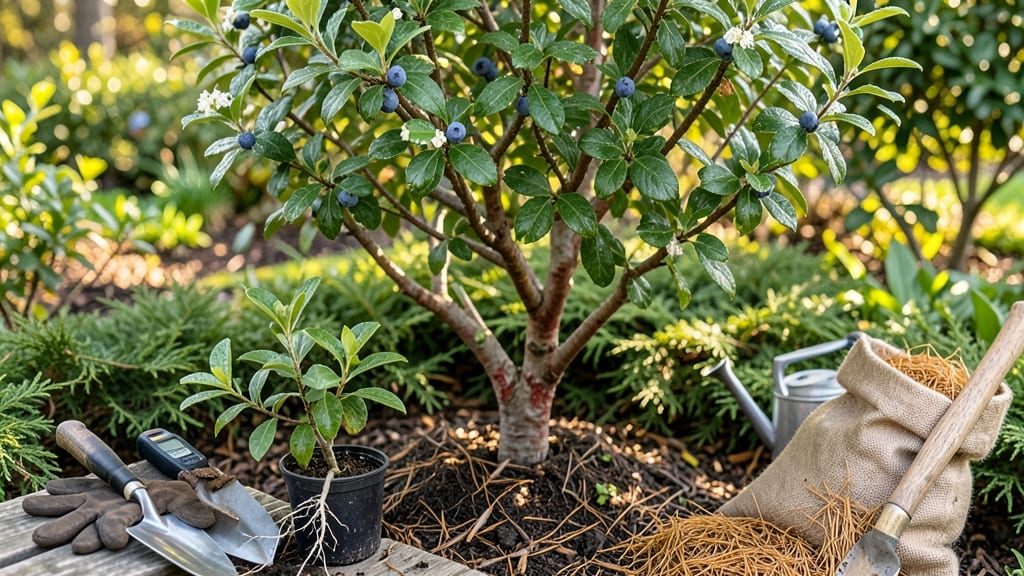
Planting blueberries in Massachusetts means timing is everything—get it wrong, and your 🫐 bushes might not survive the first frost. The key to success lies in understanding your specific USDA zone (5b-6b) and matching it with the right planting window, whether you're working with bare-root saplings or potted plants.
Most gardeners in Massachusetts swear by early spring (March-April) or early fall (September-October) planting, but why? These windows give young blueberry plants the best chance to establish roots before winter sets in or summer heat arrives.
For northern highbush varieties like 'Bluecrop,' which need 800-1,000 chill hours, spring planting gives them a head start on growth before the cold returns.
Don't overlook soil prep—the acidic conditions (pH 4.5-5.5) blueberries crave are non-negotiable. If your garden soil isn't naturally acidic, you'll need to amend it with peat moss or sulfur before planting. This is especially critical in Massachusetts, where many soils lean alkaline.
In this guide, I'll break down exactly when to plant based on your variety, how to adjust for late frosts, and what to do if you miss the ideal window. Let's get those blueberries thriving in your yard!
Best planting months in Massachusetts by blueberry variety & chill-hour needs
Massachusetts’ USDA zones 5b-6b create a unique challenge for blueberry growers—too early, and late frosts zap tender roots; too late, and your bushes won’t establish before winter.
The key? Matching your blueberry variety to its chill-hour needs (200–1,000 hours below 45°F) and planting during the frost-free window of April 15–October 15.
Northern highbush varieties like ‘Bluecrop’ thrive with 800–1,000 chill hours, while southern highbush varieties such as ‘Jersey’ need just 200–400 hours. Lowbush types (‘Lowbush’) fall in between, requiring 400–600 hours. Aligning these needs with Massachusetts’ climate ensures robust growth and abundant fruit.
Here’s the golden rule: Plant bare-root blueberries in early spring (March–April) or early fall (September–October). Spring planting lets roots establish before summer heat, while fall planting gives bushes time to root before winter dormancy. Avoid planting in late fall (November) or late winter (February)—both risk frost damage.
For spring planting, aim for late March or early April, once the soil is workable but before buds swell. This timing balances root establishment with frost risk.
In western MA (Zone 6b), where springs are warmer, you can plant as early as late February if using row covers for frost protection.
Fall planting in September is ideal for northern highbush varieties, giving roots 6–8 weeks to establish before winter. Avoid planting after mid-October, as new roots won’t harden before frost. Southern highbush varieties can handle October planting in warmer microclimates like Nantucket or Cape Cod (Zone 7a).
Microclimates play a huge role in Massachusetts. Coastal areas (e.g., Provincetown) have longer frost-free seasons and can plant 2–3 weeks later than inland zones like Worcester (Zone 5b).
Use your local USDA frost map to adjust timing—even a 5-mile difference can shift your planting window by 1–2 weeks.
If you’re unsure about chill hours, check your local weather station data for the past 3 years. For example, Boston (Zone 6b) averages 900 chill hours, perfect for ‘Bluecrop’, while Springfield (Zone 5b) hits 1,000+ hours, making it ideal for low-chill varieties like ‘Patriot’.
Container-grown blueberries can bend these rules slightly. Since they’re less frost-sensitive than bare-root plants, you can transplant them 1–2 weeks later in spring or 3 weeks earlier in fall. Just ensure containers have drainage holes and use acidic potting mix (pH 4.5–5.5).
Finally, pair your planting schedule with mulching. Apply 3–4 inches of pine needles or wood chips after planting to insulate roots in winter and retain moisture in summer. This simple step can double your survival rate in Massachusetts’ unpredictable climate.
How to time your planting for maximum survival: frost-free days & soil prep
Timing your blueberry planting in Massachusetts isn’t just about picking a month—it’s about avoiding late frosts and giving roots time to establish before winter.
The average last frost date in most of Massachusetts falls around April 15, but microclimates near coastlines or hills can shift this by 1-2 weeks. For container-grown blueberries, you’ve got a slightly wider window, but soil temperature matters just as much as air temperature.
Blueberries thrive when planted in early spring (March–April) or early fall (September–October). Spring planting lets roots establish before summer heat, while fall planting avoids summer stress and gives roots time to settle before winter dormancy.
The key is planting 4–6 weeks before your first hard frost—typically by October 1 in most of the state.
🌱 Pro Tip: Check your local USDA zone (5b–6b) and adjust timing accordingly. For example, gardeners in Zone 5b (western MA) should plant by September 15, while those in Zone 6b (southeastern MA) can push it to October 10.
⚠️ Frost Alert!
If an unexpected frost hits after planting, act fast:
- Cover young plants with burlap or frost cloth for 1–2 nights.
- Water the soil deeply before frost to insulate roots.
- Avoid mulching too early—wait until soil temps stabilize below 50°F (10°C).
Preparing your soil is just as critical as timing. Blueberries demand acidic soil (pH 4.5–5.5). Test your soil first—if it’s too alkaline, amend it with peat moss, sulfur, or pine needles.
Work in 2–3 inches of compost mixed with 1 cup of acid-loving fertilizer (like 12-4-8) per planting hole. For containers, use a pre-mixed acid-loving potting mix and repot every 2–3 years to refresh nutrients.
When planting, dig a hole twice as wide as the root ball but only as deep as the roots. Gently loosen roots if they’re circling and place the plant so the top of the root ball sits 1–2 inches above soil level.
This prevents root rot from sitting water. Backfill with amended soil, tamp lightly, and water deeply (1–2 gallons) to eliminate air pockets.
After planting, mulch with 3–4 inches of pine straw or wood chips to retain moisture and suppress weeds. Avoid fresh wood chips, which can raise soil pH over time.
In containers, use mulch-free mixes to prevent compaction. Monitor soil moisture—blueberries need consistent watering (1–2 gallons per week) but hate soggy roots.
💧 Remember: The first 30–60 days after planting are critical. Keep soil moist but not waterlogged, and avoid fertilizing until new growth appears in spring. With the right timing and prep, your blueberries will reward you with juicy harvests in 2–3 years!