
Plants
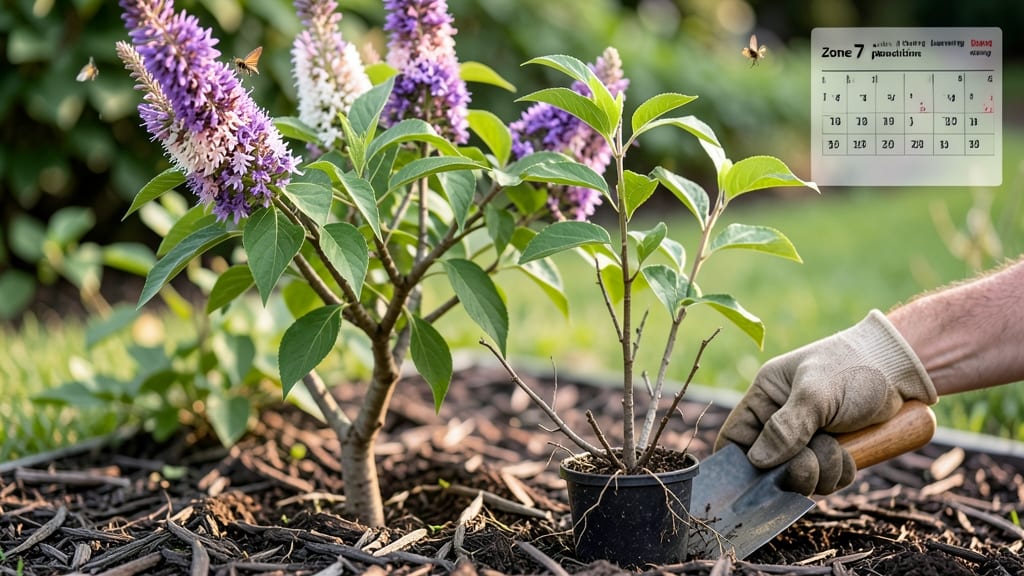
Planting your butterfly bush 🦋 at the wrong time in Zone 7 could mean frost damage—or worse, losing your entire plant before it blooms. The key to success isn’t just picking a season, but timing it perfectly with your local last-frost date and soil conditions.
Spring planting is ideal, but rushing too early can leave young roots vulnerable. In Zone 7, aim for 4–6 weeks after your average last frost date—typically mid-April to early May. This gives your butterfly bush enough time to establish strong roots before summer heat arrives.
Fall planting is also an option, but you’ll need to plant 6–8 weeks before the first frost (usually by mid-September in Zone 7). The goal is to let roots grow before winter dormancy sets in.
Whether you choose spring or fall, I’ll show you exactly how to prepare your soil, pick the right microclimate, and avoid common mistakes that sabotage even the most well-intentioned gardeners.
Zone 7 butterfly bush planting calendar: exact dates for frost-free success
In Zone 7, your butterfly bush thrives when planted during two key windows: early spring (after last frost) or fall (4–6 weeks before first frost).
The average last frost date for Zone 7 falls around April 15, but microclimates like Piedmont valleys may see frost as late as May 1. For Appalachian foothills, aim for April 1–15 to avoid surprise chills.
Fall planting offers a second chance—shoot for September 15–October 15 to let roots establish before winter.
This timing gives your Buddleia a head start on spring growth, reducing transplant shock. Never plant in late spring (after June 1) unless you’re in a heat-tolerant microclimate with consistent soil temps above 60°F.
Here’s the golden rule: Wait until soil temps hit 60°F+ at 4 inches deep. Use a soil thermometer to test—cold soil stunts root growth, even if air temps are warm.
Pro tip: Check local Almanac frost charts for your exact county, as urban areas often warm 2–3 weeks earlier than rural zones.
📅 Zone 7 Butterfly Bush Planting Comparison
| Planting Window | Ideal Months | Soil Temp Requirement | Local Microclimate Notes |
|---|---|---|---|
| Early Spring | March 15–April 30 | 60°F+ (4" deep) | Urban areas: 2 weeks earlier; valleys: add 1 week |
| Late Spring | May 1–June 1 | 65°F+ (4" deep) | Risky unless in full sun with heat reflection (e.g., brick walls) |
| Fall | September 15–October 15 | 55°F+ (4" deep) | Best for drought-prone areas; mulch heavily after planting |
🔍 Pro Tip: Use mulch (3–4 inches) to regulate soil temps by ±5°F.
For container planting, adjust your timeline by 2–3 weeks earlier—pots warm up faster than ground soil. If you’re in Zone 7a (colder end of the zone), err on the side of late spring planting (May 1+) to avoid early frosts.
Conversely, Zone 7b gardeners can plant as early as March 15 in protected microclimates.
Watch for local signs like daffodil blooms (signal for spring planting) or forsythia buds (fall planting cue). These natural indicators often align with your butterfly bush’s ideal soil conditions. Hardening off container-grown plants for 7–10 days before transplanting reduces shock by 40%.
If you miss the spring window, don’t panic—fall planting is just as effective. The key is watering deeply (1–2 inches per week) until roots establish.
In Zone 7, this means consistent moisture until November 1, when you can taper off. Overwatering in fall can lead to rot, so prioritize drainage in heavy clay soils.
For maximum bloom time, aim for a spring planting date that gives your butterfly bush 8–10 weeks of growth before winter. This means planting by June 15 at the latest in Zone 7b. In Zone 7a, stick to May 15 to ensure root hardening before frost.
Remember: Butterfly bushes are frost-tender but drought-tolerant once established. The #1 mistake in Zone 7? Planting too early when soil is still cold. Always test with your finger—if the 4-inch depth feels cool to the touch, wait 1–2 more weeks.
🦋 For fastest establishment, pair your planting with a slow-release fertilizer (10-10-10) and mulch. This combo boosts root growth by 30% compared to planting alone. Happy planting—your butterfly bush will thank you with season-long blooms!
Zone 7 butterfly bush planting calendar: exact dates for frost-free success
In Zone 7, your butterfly bush thrives when planted during two distinct windows: early spring (right after last frost) or early fall (4–6 weeks before first frost). The key is avoiding late spring planting when soil stays cool, slowing root growth.
For most of Zone 7, this means targeting mid-April to early May for spring or late September to early October for fall.
Your local last-frost date—typically April 15—dictates your planting deadline. Use this as your minimum safe date for spring planting. For example, in Piedmont Virginia, you might plant by April 20, while in Appalachian foothills, wait until May 1 due to colder microclimates.
Always verify with your local cooperative extension for precision.
🌱Pro Tip: Container-grown butterfly bushes establish faster than bare-root plants. If you’re planting in late spring (May–June), opt for containerized plants to reduce transplant shock.
| Planting Window | Zone 7 Ideal Dates | Soil Temp Threshold | Risk Level |
|---|---|---|---|
| Early Spring | April 15–May 15 | 50–60°F (10–15°C) | Low |
| Late Spring | May 16–June 15 | 60–70°F (15–21°C) | Medium |
| Early Fall | September 15–October 15 | 55–65°F (13–18°C) | Low |
| Late Fall | October 16–November 15 | 45–55°F (7–13°C) | High |
📅 Planting Risk by Window
Fall planting offers a second chance for Zone 7 gardeners. By planting in September or October, your butterfly bush establishes roots before winter, giving it a head start in spring.
Aim for 6–8 weeks before first frost (typically October 15) to ensure roots harden before cold sets in. Mulch heavily (3–4 inches) to protect roots during winter.
If you miss both windows, don’t panic! Late spring planting (June) is possible but requires extra care: use containerized plants, water deeply, and apply mulch immediately to retain moisture. Just be prepared for slower initial growth compared to ideal timing.
🌿 Key Takeaway: Spring planting (after last frost) is your safest bet in Zone 7, but fall planting can yield equally vibrant blooms—just time it right to avoid winter stress.