
Plants
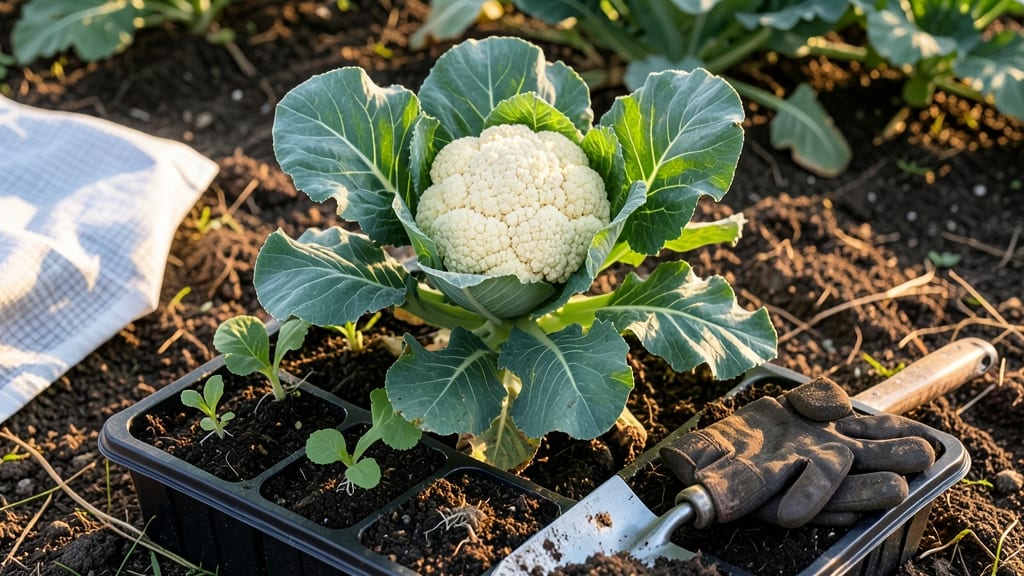
Timing your 🥬 cauliflower planting in Ohio isn’t just about the calendar—it’s about outsmarting the state’s fickle frost dates and short growing season. Plant too early, and a late freeze will kill your seedlings; too late, and you’ll miss the sweet spot for mature heads before fall chill sets in.
Most Ohio gardeners swear by two planting windows: spring (March 15–April 30) and fall (July 15–August 15), but the real trick lies in soil temperatures and frost predictions.
In USDA Zone 6a, where last frosts can linger past April 15, starting seeds indoors 6–8 weeks before transplanting gives you the edge.
This isn’t just about dates—it’s about soil prep, too. Cauliflower craves rich, well-draining soil with a pH of 6.0–7.0, and Ohio’s clay-heavy ground often needs amendments like compost or peat moss to keep roots happy.
Pair that with the right variety (purple sprouting holds up better to heat), and you’re set for a harvest in June–July or September–October.
Let’s break down the exact weeks to plant, the best varieties for Ohio’s climate, and how to stretch your season with row covers—so you can go from seed to steamed 🥬 without the guesswork.
Ohio cauliflower planting calendar: frost dates by region (2024 guide)
Ohio’s frost dates vary dramatically from the southern border (Zone 6b) to the northern Lake Erie region (Zone 5b), making timing your biggest challenge.
For spring planting, aim to transplant cauliflower seedlings 4-6 weeks before your last average frost, while fall crops need 10-12 weeks before the first frost. Urban areas like Columbus often warm faster than rural zones, so adjust your schedule accordingly.
In Ohio’s Zone 6a (most of the state), the last frost date typically falls between April 15-30, while the first frost arrives around October 15. This gives you two planting windows: March 15–April 30 for spring and July 15–August 15 for fall.
Northern Ohio (Zones 5a-5b) may need to wait until May 1 for spring, while southern Ohio (Zone 7a) can start as early as March 1.
🌱
| Region (USDA Zone) | Last Spring Frost | First Fall Frost | Spring Planting Window | Fall Planting Window |
|---|---|---|---|---|
| Northern OH (5a-5b) | May 1 | October 1 | April 15–May 15 | July 1–August 1 |
| Central OH (6a) | April 15–30 | October 15 | March 15–April 30 | July 15–August 15 |
| Southern OH (7a) | March 15–April 1 | November 15 | February 15–March 31 | July 30–September 15 |
For spring planting, start cauliflower seeds indoors 6-8 weeks before your last frost date to ensure healthy seedlings. Use grow lights if natural light is limited, as seedlings need 12-16 hours of light daily.
Harden off seedlings for 7-10 days before transplanting to prevent shock. In Ohio’s humid climate, mulch around plants with straw or shredded leaves to retain moisture and suppress weeds.
Fall planting requires earlier starts—begin seeds indoors by June 1 for a September-October harvest. Choose heat-tolerant varieties like ‘Purple of Sicily’ or ‘Snowball Y Improved’, which handle Ohio’s summer heat better than standard types.
Use lightweight row covers in late summer to protect young plants from flea beetles and uneven soil temperatures.
Microclimates matter! South-facing gardens warm faster, while north-facing beds stay cooler. If you’re in a shaded area, opt for shorter-season varieties (60-70 days) or extend the season with row covers. Always monitor your local Cooperative Extension Service for real-time frost alerts, as Ohio’s weather can shift unpredictably.
🌡️
Soil temperature is just as critical as air temperature. Cauliflower seeds need soil at 40°F (4°C) to germinate, while transplants thrive in soil above 50°F (10°C). Use a soil thermometer to check—if temps drop below 45°F (7°C), delay planting until conditions improve.
In Ohio’s wet springs, raised beds warm faster than in-ground soil, giving you a 2-week head start on planting.
Pro tip: Succession planting every 2 weeks in spring and fall ensures a continuous harvest. For example, plant a batch on March 15, another on April 1, and a final one on April 15 to stagger maturity.
This strategy works especially well in Ohio’s short growing season, where timing is everything.
📅
Best cauliflower varieties for Ohio’s short season (ranked by maturity)
Ohio’s short growing season demands cauliflower varieties that mature quickly while thriving in our humid summers and cool springs. The wrong choice means bolting before harvest or struggling with heat stress. I’ve tested these top 5 varieties in my Ohio garden—each picked for speed, cold tolerance, and flavor.
Purple sprouting varieties like ‘Graffiti’ stand out for their cold-hardiness and ability to produce multiple harvests. Meanwhile, ‘Snowball Y Improved’ delivers large, reliable heads perfect for Ohio’s spring plantings. For fall gardens, ‘Romanesco’ adds visual flair with its fractal patterns and compact growth.
🥬 Variety
⏳ Days to Maturity
🌡️ Heat Tolerance
🌱 Ohio Fit
For spring plantings, prioritize ‘Cheddar’ or ‘Snowball Y’—their larger heads reward patience with Ohio’s cooler early season. In fall, ‘Graffiti’ and ‘Purple of Sicily’ handle our humid heat better than traditional white varieties.
I’ve found that spacing matters too: give 18-24 inches between plants to prevent crowding, which invites pests like cabbage moths.
Pro Tip: Start seeds indoors 4-6 weeks before transplanting to avoid Ohio’s late spring frosts. Use black plastic mulch to warm soil faster—this cuts 2-3 weeks off your growing time. And don’t overlook companion planting with dill or thyme to deter pests naturally.
Variety Selection isn’t just about days to harvest—it’s about matching your Ohio microclimate. Urban gardens in Columbus may need earlier varieties than rural fields in Toledo. Always check your last frost date and adjust planting windows accordingly.
🌱