
Trees
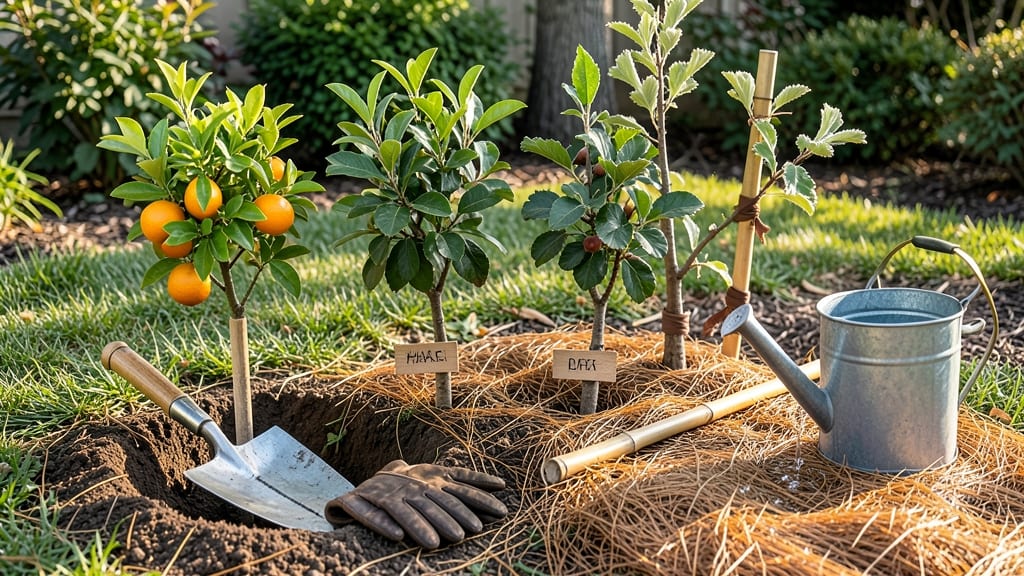
Planting fruit trees 🍎🍊🍇 in Florida at the wrong time can turn your dream orchard into a frustrating gamble—especially when humidity and heat play tricks on your timing.
The key isn’t just when you plant, but how you sync it with Florida’s unique climate zones, from frost-prone North Florida to frost-free South Florida.
Most fruit trees thrive when planted during dormant seasons, like late winter or early spring, but tropical varieties like mangoes or avocados have different rules.
I’ll break down the exact months to avoid heat stress, pests, and even hurricane season disruptions—so you can set your trees up for strong root growth from day one.
Whether you’re a first-time gardener or a seasoned grower, getting this right means fewer headaches and more harvests. You’ll learn which varieties play well together, how to prep your soil for Florida’s sandy conditions, and why mulch isn’t just a nice-to-have—it’s a game-changer for moisture retention.
Let’s dive into the best planting windows for your region, plus pro tips to keep your fruit trees happy year-round. Your future breakfast (or smoothie) depends on it!
Best Florida fruit tree planting months by dormant season
Florida’s mild winters and humid summers create unique challenges for fruit tree planting. Unlike northern climates, Florida’s dormant season isn’t defined by freezing temperatures—it’s about avoiding extreme heat and hurricane season.
The best time to plant most fruit trees is during the cooler months, when roots establish before summer stress sets in.
For citrus trees, avocados, and figs, the ideal window stretches from November through March. This aligns with Florida’s natural dry season, reducing fungal risks and allowing roots to grow before the monsoon rains of late spring.
Tropical varieties like mangoes and lychees can be planted year-round in South Florida, but even they benefit from cooler weather.
Timing matters because Florida’s USDA Zones 8a–11 mean some areas experience light frosts (especially in North Florida), while others remain frost-free. Planting in late winter ensures young trees avoid both cold snaps and summer’s intense heat.
For example, a peach tree planted in June might struggle with heat stress and poor root establishment.
Another critical factor is hurricane season, which runs from June to November. Planting in May or October risks exposing young trees to storm damage. Instead, aim for January or February, when temperatures average 60–75°F—perfect for root growth without stress.
Bare-root trees thrive when planted in winter, as their unprotected roots benefit from cooler soil temperatures. Container-grown trees, however, offer more flexibility and can be planted year-round, though spring or fall still yields the best results.
Always check the specific variety’s needs—some, like ‘Valencia’ oranges, are more heat-tolerant than others.
| Fruit Tree Type | Best Planting Months | Key Considerations |
|---|---|---|
| Citrus (Oranges, Lemons, Limes) | November–March (avoid frost risk in North FL) | Needs well-draining soil; avoid waterlogging |
| Avocado | Year-round (best in fall/winter for North FL) | Tropical; prefers 60–85°F soil temps |
| Fig | January–March (or September–October) | Drought-tolerant once established; mulch heavily |
| Peach/Plum | November–February (avoid summer heat) | Needs cross-pollination; frost-sensitive |
| Mango (South FL) | Year-round (best in spring) | Slow to establish; protect from hurricanes |
If you’re in South Florida (Zones 10a–11), you can plant tropical fruit trees like mangoes or lychees almost anytime, but spring (March–May) is ideal for fast root establishment before the wet season.
In North Florida (Zones 8a–9a), focus on November–February to avoid late-winter frosts and summer’s oppressive heat.
Pro tip: Container-grown trees planted in summer (June–August) can succeed if you water deeply and use shade cloth to reduce stress. However, they’ll grow more slowly than those planted in cooler months.
For bare-root trees, always plant before the first signs of new growth—usually in late winter.
For citrus trees, timing is extra critical because they’re evergreens and heat-loving. Planting in summer can cause root burn or fungal infections. Instead, choose January or February when soil temperatures are 60–70°F, giving roots time to establish before spring’s intense sun.
Remember, Florida’s microclimates vary dramatically. A coastal area in Miami may have no frost risk, while Lake City (Zone 8a) could see 28°F temps. Always check your local frost dates and plant accordingly.
With the right timing, your fruit trees will thrive and reward you with years of harvests.
How to prepare soil and choose varieties for Florida’s climate
Florida’s sandy, fast-draining soil often needs amendments to support fruit trees. Start by testing your soil pH—most fruit trees thrive in slightly acidic to neutral soil (pH 6.0–7.0). Citrus, for example, prefers pH 6.0–6.5, while avocados tolerate pH 5.5–7.0.
If your soil is too alkaline, mix in sulfur or peat moss to lower pH gradually over 3–6 months.
Next, improve drainage by blending compost or well-rotted manure into the planting hole. Florida’s heavy rains can suffocate roots, so avoid clay-heavy soils. For container-grown trees, use a 50/50 mix of potting soil and perlite to prevent compaction.
Mulch with wood chips or pine straw to retain moisture and regulate soil temperature—just keep mulch 3–4 inches away from the trunk to avoid rot.
- ☑️ Test pH with a soil kit (available at garden centers)
- ☑️ Amend with compost (2–3 inches mixed into top 12 inches of soil)
- ☑️ Add organic matter (e.g., coconut coir, leaf mold for moisture retention)
- ☑️ Raise beds slightly (6–12 inches) if drainage is poor
- ☑️ Mulch with 2–3 inches of organic mulch (avoid fresh wood chips)
When selecting fruit tree varieties, prioritize those bred for Florida’s heat and humidity.
For example, ‘Valencia’ oranges and ‘Hamlin’ grapefruit handle Florida’s summers better than northern varieties. Avocados like ‘Choquette’ or ‘Lamb Hass’ thrive in South Florida’s USDA Zones 10–11, while figs (e.g., ‘Brown Turkey’) adapt well to North Florida’s cooler winters (Zone 8a).
Always check the USDA Zone for your specific county—Florida spans Zones 8a–11, so microclimates matter!
Dwarf or semi-dwarf varieties are ideal for home gardens, as they’re easier to manage and produce fruit faster. A dwarf citrus tree (e.g., ‘Calamondin’) stays under 8 feet, while a standard avocado can reach 30+ feet. If space is limited, consider espaliered fruit trees (trained against a fence or trellis) for apples or pears—though these need cross-pollination for fruit set.
Water management is critical in Florida’s unpredictable climate. Newly planted trees need deep watering 2–3 times per week for the first month, then taper to once a week once established. Use drip irrigation or soaker hoses to deliver water slowly at the root zone, reducing fungal diseases. Avoid overhead sprinklers, which can spread citrus greening disease or anthracnose in humid conditions.
Finally, fertilize strategically to avoid overloading trees. Use a balanced, slow-release fertilizer (e.g., 6-6-6 or 8-3-9) in early spring and fall, and avoid high-nitrogen fertilizers in summer, which can stress trees during Florida’s 90°F+ heat waves.
For citrus trees, a citrus-specific fertilizer with micronutrients (zinc, manganese) prevents deficiencies common in Florida’s sandy soils.
With the right soil prep, variety selection, and care routine, your Florida fruit trees will establish strong roots and bear abundant harvests for years to come. 🌿🍊