
Trees
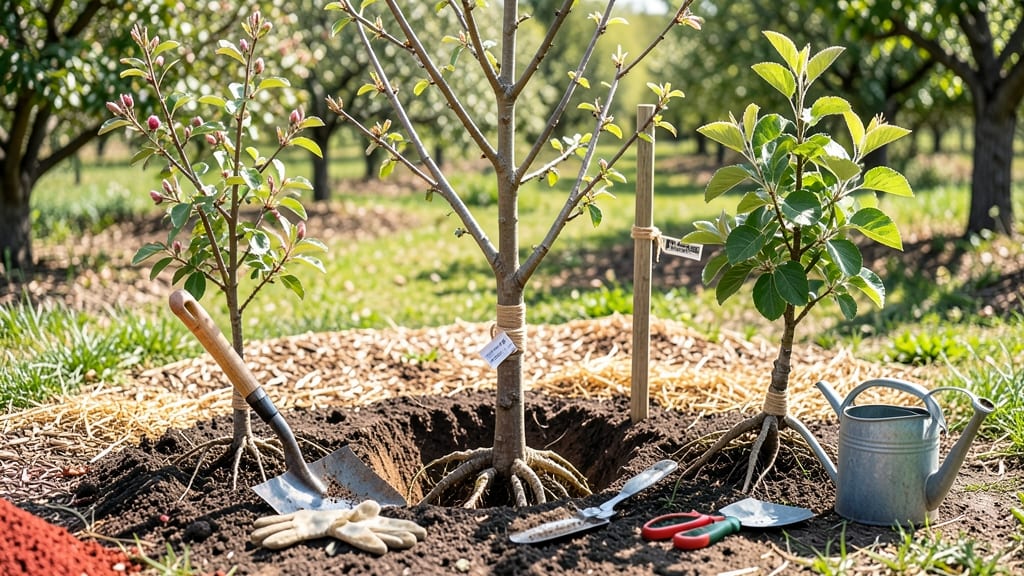
Planting fruit trees in Washington at the wrong time can turn your orchard dreams into years of frustration—especially when you're dealing with 5b-9a zones that swing from icy winters to scorching summers.
The key isn't just picking a season; it's reading your local microclimate like a pro to give those roots the perfect start.
I’ve watched too many gardeners rush planting because they missed the late winter window (February–April) when soil is workable but frost isn’t lurking. That’s when your 🍎 trees establish roots before spring’s growth spurt—setting them up for stronger yields in just a few years.
But timing varies wildly: Seattle’s milder climate plays by different rules than Yakima’s dry heat.
You’ll learn exactly which months work best for each variety—whether it’s stone fruits like peaches or pome fruits like apples—and how to tweak your schedule for your specific corner of Washington. Spoiler: Fall planting (September–October) has its perks too, but only if you nail the soil temp and moisture game.
Let’s cut through the guesswork so you can plant with confidence, avoid common pitfalls, and grow fruit trees that thrive from Spokane to the Puget Sound. Ready to get started?
Best planting months for fruit trees in Washington by variety
Washington’s diverse climate—from the mild, wet winters of the Puget Sound to the dry, cold snaps of Eastern WA—means timing matters for fruit tree success. Planting too early risks frost damage, while waiting too long can stunt root growth.
The ideal window is late winter to early spring, when soil thaws but before buds burst.
For bare-root trees, the best months are February through April, while container-grown trees can also handle fall planting (September–October). Stone fruits like peaches and cherries need cooler climates, while apples and pears thrive in Washington’s varied zones.
🌱 Key Insight: Plant while trees are dormant to minimize stress. This gives roots time to establish before the spring growth flush.
In Western Washington (Seattle, Bellingham), where winters are milder (Zone 7b–8a), you can push planting to late April for container-grown trees. But in Eastern WA (Spokane, Wenatchee, Zone 5b–6a), aim for March to avoid late frosts that can kill emerging buds.
For dwarf varieties, like columnar apples or patio peaches, follow the same timing but plant 1–2 inches deeper than the graft union. This encourages stronger root growth in compacted urban soils.
I once planted a Bing cherry tree in May—it survived, but its first year’s growth was half the size of a tree planted in March. The lesson? Patience pays off with fruit trees.
If you’re in Zone 9 (Yakima Valley), where summers are hot and dry, prioritize fall planting (September) to give roots time to establish before the intense summer heat.
Always check your local last frost date—tools like the Old Farmer’s Almanac or Washington State University Extension provide region-specific data. For example, Seattle’s last frost is around April 15, while Spokane’s can linger until May 10.
Pro tip: Soak bare roots in water for 1–2 hours before planting to revive them. This is especially critical for mail-order trees shipped in winter.
Critical factors that determine Washington fruit tree planting success
Washington’s diverse climate—from Puget Sound’s mild winters to Eastern WA’s dry heat—means planting fruit trees at the wrong time can spell disaster. The key to success lies in understanding soil temperature thresholds, frost risks, and moisture levels before you dig.
For example, bare-root trees need to establish roots 4–6 weeks before bud break, while container-grown trees can handle a slightly later start.
Timing isn’t just about the calendar—it’s about microclimates. In Zone 7b Seattle, you might plant apple trees in March, but in Zone 5b Spokane, waiting until mid-April avoids late frost damage.
Always check your local last frost date (e.g., April 15 in Seattle, May 1 in Yakima) and plan accordingly.
🚨 CRITICAL WARNING
Before planting, test your soil’s temperature—it should be 40–50°F for bare-root trees and 50–60°F for container-grown ones. Use a soil thermometer to check 6 inches deep. In Western WA, this usually aligns with late February–March, while Eastern WA may need to wait until April.
Moisture matters just as much as temperature. Drought-stressed trees struggle to establish roots, so water deeply 1–2 weeks before planting and again immediately after.
In Eastern WA’s arid zones, mulch with 4–6 inches of wood chips to retain moisture, while Western WA’s wetter climates may require raised beds for drainage.
Don’t overlook variety selection. Disease-resistant varieties like ‘Envy’ apples or ‘Lapins’ cherries thrive in Washington’s climate, but even the best tree fails if planted at the wrong time. For stone fruits (peaches, cherries), prioritize late-winter planting to avoid bacterial canker risks from spring rains.
Finally, prune correctly after planting: Remove 1/3 of the canopy to reduce water loss, but avoid heavy pruning until spring.
In Washington’s maritime zones, this means waiting until March–April to prune, while inland areas can prune slightly earlier. Label your trees and track growth—patience is key, as it takes 2–3 years for roots to fully establish.