
Trees
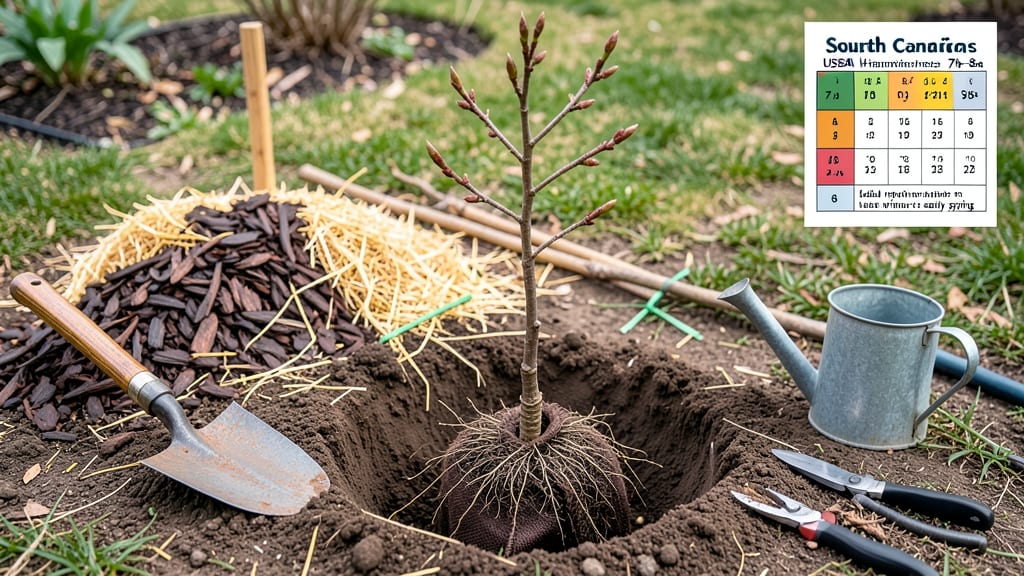
When to plant fruit trees in SC can make the difference between a thriving orchard and years of disappointment. Planting too early risks frost damage, while waiting too late means slower root establishment—both mistakes cost you precious growing seasons.
I’ve helped dozens of SC gardeners avoid these pitfalls by matching planting windows to chill-hour zones and last frost dates.
Whether you’re growing peaches in the Upstate or citrus near Charleston, knowing when to plant fruit trees in SC is the key to a 90% success rate—and I’ll show you exactly how to do it.
From late winter’s dormancy to spring’s first blooms, we’ll cover the ideal months for each variety, soil prep secrets for SC’s acidic soils, and how to protect young trees from unexpected cold snaps. No more guessing—just science-backed timing for fruit trees that grow strong and bear well.
Ready to plant with confidence? Let’s break down the best windows, regional adjustments, and pro tips so your trees get off to the right start—and stay ahead of SC’s unpredictable weather.
South Carolina chill-hour zones: matching fruit trees to your region
South Carolina’s mild winters and humid summers create a unique challenge for fruit tree growers: chill hours. These are the number of hours below 45°F (7°C) your trees need to set fruit.
Planting the wrong variety for your chill-hour zone means no harvest—or worse, a tree that struggles to survive. Let’s break down SC’s zones and the best fruit trees for each.
Most of South Carolina falls into USDA Zones 7b-9a, with chill-hour ranges from 300-1000+ hours. For example, Charleston (Zone 8b) averages 500 chill hours, while Greenville (Zone 7b) gets 800-900 hours.
This difference explains why peaches thrive in Greenville but may fail in Charleston without the right variety.
🌱 Pro Tip: Use the Clemson Extension Service’s Chill-Hour Calculator to pinpoint your exact zone. This tool factors in local microclimates (like urban heat islands) for precise planting advice.
🌳 South Carolina Chill-Hour Zones & Best Fruit Trees
| Chill-Hour Zone | USDA Zone | Best Fruit Trees | Notes |
|---|---|---|---|
| 300-500 hrs | 8a-9a | Citrus (oranges, lemons), Figs, Pomegranates | Low-chill varieties like 'Satsuma' mandarins or 'Celeste' figs thrive here. |
| 500-700 hrs | 7b-8b | Peaches, Plums, Nectarines, Persimmons | Choose low-chill varieties like 'Redhaven' peaches or 'Santa Rosa' plums. |
| 700-900+ hrs | 7a-7b | Apples, Pears, Cherries, Blueberries | Standard varieties like 'Fuji' apples or 'Bartlett' pears do well. |
💡 Need help? Check the Clemson Extension’s Chill-Hour Map for your exact location.
If you’re in a low-chill zone (300-500 hrs), avoid traditional peach or apple trees—they’ll bloom but produce no fruit. Instead, opt for tropical or subtropical varieties like figs or citrus, which require minimal cold exposure.
For example, the 'Brown Turkey' fig thrives in Zone 8 with just 300 chill hours.
🌿 Soil Matters Too: South Carolina’s acidic soils (pH 4.5-5.5) can stunt growth. Test your soil and amend with lime (for pH 6.0-6.5) or sulfur (for pH below 5.0) before planting. Most fruit trees prefer a slightly acidic to neutral pH.
For urban gardeners with limited space, consider dwarf varieties like the 'Columnar' apple or 'Patio' peach. These fit in small yards and containers while still meeting chill-hour requirements. Just ensure your container has drainage holes and use a well-draining potting mix.
🌡️ Watch for Microclimates: Coastal areas (e.g., Hilton Head) may have warmer winters than inland cities like Columbia. If you’re near the coast, plant heat-tolerant varieties like 'Tropicana' peaches or 'Improved Meyer' lemons.
Finally, avoid planting in fall unless you’re in Zone 7a or higher with figs or persimmons. Most fruit trees need 6-8 weeks of dormancy before spring growth. Planting in late winter (February-March) gives roots time to establish before the spring flush.
Best planting months for South Carolina fruit trees by variety
Timing matters more than you might think when planting fruit trees in South Carolina. The ideal window for most varieties is late winter to early spring, but specific types like citrus and figs have different needs.
Let’s break down the best months for popular fruit trees based on SC’s climate and chill-hour requirements.
For peaches, plums, and apples, aim to plant between February and March.
These trees need 300-1000 chill hours to set fruit properly, and early spring gives roots time to establish before summer heat arrives. Citrus trees, like grapefruit and oranges, prefer early spring planting (March) to avoid frost damage.
📌 Numbered Highlights: Planting Schedule by Tree Type
- 🍑 Peaches & Plums: February-March (bare-root or potted). Soil temp should be 45-55°F for best root growth.
- 🍎 Apples: Late winter (Feb) in Zone 7b-8a. Choose dwarf varieties for smaller spaces.
- 🍊 Citrus: March-April after last frost. Container planting works well for urban SC gardens.
- 🍇 Figs: Fall (Oct-Nov) or early spring (March). Hardier varieties like Celeste thrive in SC’s heat.
- 🍒 Cherries: Late winter (Feb). Sweet cherries need 500+ chill hours—check your zone!
Fall planting (October-November) works for figs, pomegranates, and persimmons, which benefit from cooler temps and winter rains. However, avoid planting in late fall if frost is expected—young roots can’t handle freezing. For container-grown trees, you can plant anytime, but spring or fall still gives the best results.
Pro tip: Amend your soil 4-6 weeks before planting with compost and sulfur (SC’s soil is naturally acidic). A pH of 6.0-6.5 works best for most fruit trees. Mulch with wood chips to retain moisture and regulate soil temp.
Remember, bare-root trees (sold without soil) should be planted immediately, while potted trees can wait a few weeks. Water deeply after planting—15-20 gallons for young trees—and keep soil moist for the first 2-3 months to encourage root growth.
If you’re in Zone 8a or warmer, you can extend planting into April, but act fast—summer’s heat arrives sooner than you think. For urban gardeners, dwarf varieties like columnar apples or patio peaches are perfect for containers and smaller yards.